What the Grand National Means for British Betting
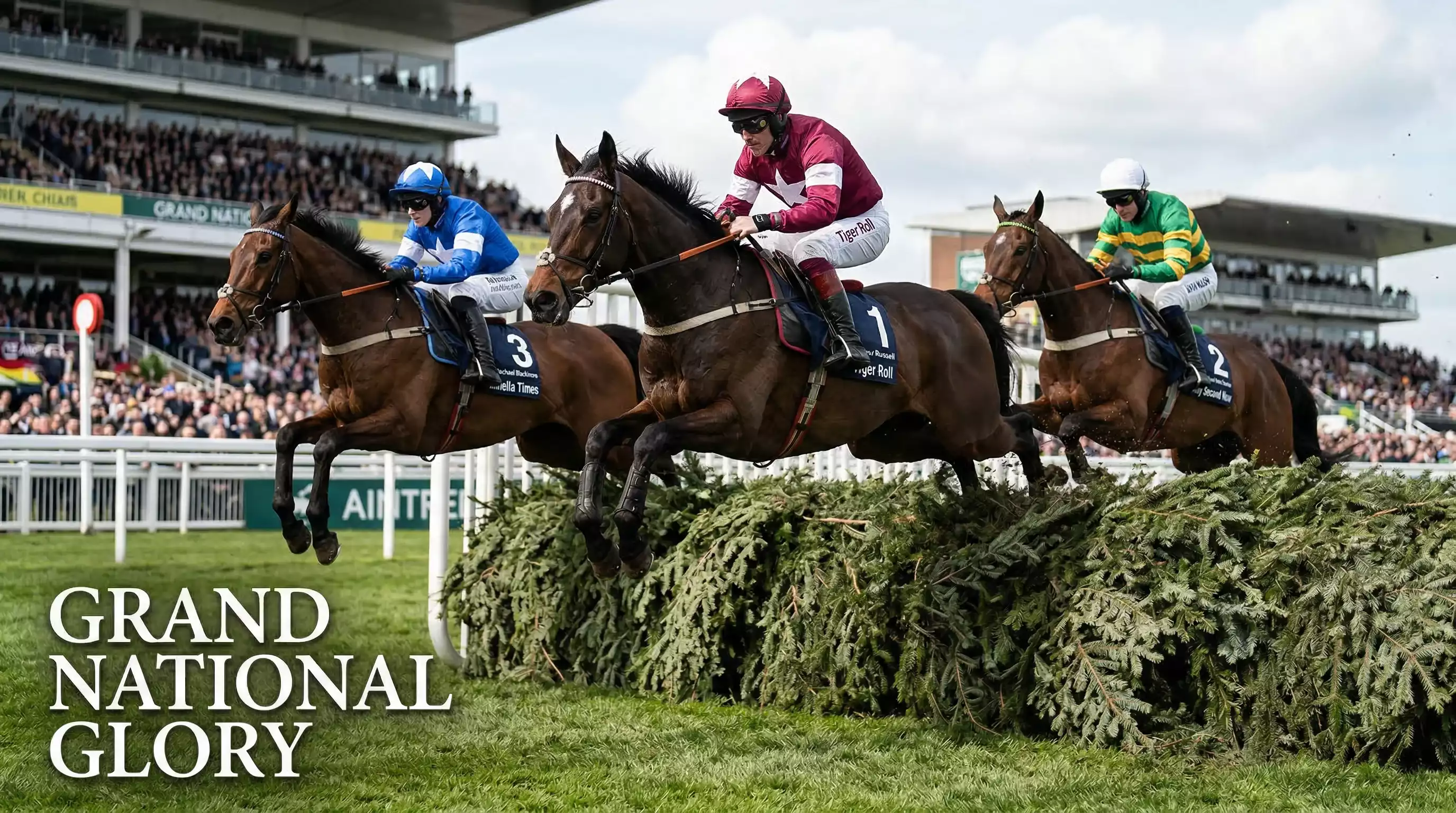
Every April, something peculiar happens across Britain. People who never step foot in a betting shop, who couldn't name a single racehorse if their pub quiz depended on it, suddenly start studying form guides and debating the merits of a ten-year-old gelding carrying 11 stone over 30 fences. The Grand National does that to a country. It turns roughly 13 million adults — about a third of the UK's grown-up population — into punters for a single afternoon, according to the Betting and Gaming Council.
The race has been running since 1839, and betting on it has been woven into the national fabric for almost as long. It's the one event where your nan picks a horse because she likes the name, your colleague runs an office sweepstake, and a William Hill spokesperson talks about turnover figures that would make a FTSE 250 CFO raise an eyebrow. The 2025 edition drew 5.2 million ITV viewers domestically and an estimated global audience of 600 million across 140 countries. Those aren't just numbers — they represent a shared cultural moment that barely any other sporting event in Britain can match.
"The Grand National is one of the precious few sporting events in this country with the ability to unite the entire nation around a single spectacle. It is the nation's punt." — Gráinne Hurst, CEO, Betting and Gaming Council
This guide is built for the once-a-year punter. Maybe you've placed a Grand National bet before and felt like you were guessing. Maybe this is your first time and the jargon alone — each-way, ante-post, NRNB — sounds like a foreign language. Either way, you're in the right place. We'll walk through every step, from opening an account to understanding exactly where your money goes after you've backed a horse at 25/1. No fluff, no hard sell, just the information you need to make the 2026 Grand National your most informed flutter yet.
Whether you plan to stake a fiver or take a more structured approach, the fundamentals are the same. And in a race where the average winning price over the last decade sits at 18.7/1, understanding those fundamentals isn't just useful — it's the difference between a wild punt and a considered one.
Your Betting Essentials at a Glance
- The Grand National attracts around £250 million in wagers annually, with over 80% of bets placed at £5 or less — this is a mass-participation event, not a high-roller arena.
- Each-way betting dominates for good reason: in a 34-runner race averaging 18.7/1 for the winner, the place portion delivers genuine value, especially with bookmakers offering up to eight places.
- Filter your selections using form, weight (favour the 10-7 to 11 stone range), age (eight to ten), and going preference — then spread your budget across two or three contenders.
- Every pound wagered feeds the racing ecosystem: a record £109 million levy went to prize money, horse welfare, and integrity services in 2024–25.
- Set a budget, use responsible gambling tools, and treat the Grand National as entertainment. Check bookmaker place terms before betting — a two-minute comparison can meaningfully improve your returns.
Grand National 2026: The Numbers That Matter
£250 million — estimated total wagered on the 2025 Grand National, with around £150 million coming from casual bettors who rarely bet on horse racing the rest of the year (BGC estimate).
£1,000,000 — the Grand National prize fund, making it the richest jumps race in Britain. The wider Aintree Festival distributes over £3 million across the three-day meeting.
18.7/1 — the average starting price of the Grand National winner over the last decade. This isn't a race that rewards cautious, short-priced favourites. Only six market leaders have won since 1999: Hedgehunter (2005), Comply Or Die (2008), Don't Push It (2010), Tiger Roll (2019), Corach Rambler (2023), and I Am Maximus (2024). The rest went to horses priced anywhere from 10/1 to 50/1.
6 out of 26 — the number of times the favourite has won the Grand National since 1999 (the 2020 race was cancelled due to COVID-19). Noble Yeats delivered the biggest upset in recent memory at 50/1 in 2022, while Tiger Roll at 4/1 in 2019 was the shortest-priced winner of the decade. The message is clear: the Grand National rewards breadth, not blind faith in the market leader.
These numbers set the stage for everything that follows. A quarter of a billion in wagers means the bookmaker market is deep and liquid, which translates into competitive odds and generous promotions. A million-pound prize fund attracts the best staying chasers in training. And a ten-year average winning price nudging 19/1 tells you that each-way betting — where you collect even if your horse finishes in a place position — isn't just popular, it's mathematically sensible. Keep these figures in mind as we move through the mechanics of placing a bet.
How to Place a Bet on the Grand National Online
Placing a Grand National bet online takes less time than making a cup of tea — about five minutes if you already have an account, perhaps fifteen if you're starting from scratch. The process is straightforward, but knowing what to expect at each stage removes the guesswork. Around 30% of people who bet on the Grand National are either making their very first deposit or returning after more than a year away, according to Entain data shared via the BGC. If that's you, the steps below are designed with first-timers in mind.

Step 1: Choose a Licensed Bookmaker
Every operator legally accepting bets in Britain must hold a licence from the Gambling Commission. You can verify any bookmaker's licence status on the Commission's public register. Stick to well-known, licensed brands — the likes of bet365, William Hill, Paddy Power, Betfair, Ladbrokes, and Coral. Each offers slightly different Grand National promotions (extra each-way places, best odds guaranteed, faller insurance), so it's worth glancing at terms before committing. We'll cover those specifics in later sections.
Step 2: Register and Verify Your Identity
You'll need to be 18 or over and based in the UK (or an eligible jurisdiction). Registration asks for your name, date of birth, address, email, and a username. Most bookmakers now require identity verification before you can place a bet or withdraw winnings — this means uploading a photo of your passport or driving licence and sometimes a proof of address. Since February 2025, the Gambling Commission's enhanced financial vulnerability checks can also be triggered by a net deposit of just £150 within 30 days, as set out in a House of Commons Library briefing, so don't be alarmed if you're asked additional questions about affordability. It's a regulatory requirement, not a red flag.
Step 3: Deposit Funds
Debit cards (Visa, Mastercard) are the most common method. Apple Pay, Google Pay, PayPal, and bank transfers are also widely accepted. Credit card gambling has been banned in Britain since April 2020. Most bookmakers have a minimum deposit of £5 or £10. Set a budget before depositing — decide what you're comfortable losing and stick to it. The deposit limit tools offered by every licensed operator are genuinely useful here.
Step 4: Find the Grand National Market
Navigate to the horse racing section and look for the Grand National (Aintree, Saturday of the festival — typically mid-April). In the weeks before the race, the market will be listed under ante-post or future betting. On the day itself, it appears in the day's race card. You'll see a list of runners with their odds. Tap or click the odds next to your chosen horse to add it to your bet slip.
Step 5: Build Your Bet Slip and Confirm
Your bet slip is where you decide how much to stake and what type of bet to place. For a basic win bet, just enter your stake. For an each-way bet, tick the "each-way" box — your total outlay doubles because you're placing two bets (one on the win, one on the place). Review the potential returns displayed on the slip, confirm the bet, and you're done. Your bet is live. You'll receive a confirmation in your account and usually by email too.
Interactive Tool
Non-Casual Bettor Spend, and Field Size Reduction
Work out how much of the National's turnover comes from regular punters, and the exact percentage cut behind the field-size reform.
From Regular Bettors
-
-
Total Wagered
-
From Casual Bettors
-
Non-Casual Share
What this guide gives as one figure without the other side: "an estimated total wagered on the 2025 Grand National, with around £150 million coming from casual bettors who rarely bet on horse racing the rest of the year." The remainder is never calculated — it's £100 million from regular bettors, 40% of total turnover.
Percentage Cut
-
-
Old Cap
-
Current Cap
-
Runners Removed
-
What this guide states as two numbers without the reduction: "The field size was capped at 40 and reduced to 34 from 2024 onwards." The percentage cut is never calculated — it's -15.0%, removing 6 runners from the maximum field.
A quick note on timing. Ante-post markets for the Grand National open months in advance, sometimes as early as the previous autumn. Prices are generally bigger the earlier you bet, but if your horse doesn't run, you lose your stake unless you've taken a Non-Runner No Bet offer. Betting on the morning of the race or during the live show gives you the security of knowing your horse is a confirmed runner, plus you benefit from Best Odds Guaranteed where available. There's no single right answer — it depends on whether you value price or certainty.
Every Grand National Bet Type in Plain English
The Grand National offers a wider menu of bet types than most races, partly because the large field (up to 34 runners) and unpredictable nature of the race create opportunities that shorter, flatter events simply don't. Here's what's available, stripped of industry jargon.
Win Bet
The simplest wager in racing. You pick a horse, stake your money, and collect only if that horse crosses the finish line first. At odds of, say, 20/1, a £5 win bet returns £105 (£100 profit plus your £5 stake). The appeal is pure: maximum reward for a correct prediction. The risk is equally pure — anything other than first place and your money is gone. In a 34-runner Grand National where long-priced winners are the norm, win-only bets suit punters who have strong conviction in a specific horse or who prefer the all-or-nothing thrill.
Each-Way Bet
The Grand National's most popular bet type, and for good reason. An each-way bet is actually two bets: one on your horse to win, and one on it to finish in a place position (typically the top four, five, or more finishers depending on the bookmaker). If your horse wins, both bets pay out. If it places but doesn't win, you collect on the place part at a fraction of the win odds — usually one quarter or one fifth. The trade-off is that your total stake is doubled: a £5 each-way bet costs £10 (£5 on the win, £5 on the place). We'll break this down fully in the dedicated each-way section below.
Ante-Post Bet
A bet placed before the day of the race — often weeks or months in advance. Ante-post odds are typically more generous because they carry additional risk: if your horse is withdrawn before the race, your stake is lost. Some bookmakers offer Non-Runner No Bet (NRNB) terms on Grand National ante-post markets, which refund your stake if the horse doesn't run. Always check whether NRNB applies before placing an early bet. The spring 2026 ante-post market has been active since late 2025, with early movers already backed at prices unlikely to be available on race day.
Forecast and Tricast
A forecast requires you to predict the first and second finishers in the correct order (straight forecast) or in any order (reverse forecast). A tricast extends this to the first three. In a 34-runner field with big-priced contenders, getting the exact finishing order right is genuinely difficult — but the payouts reflect that difficulty. A straight forecast on two horses finishing at 20/1 and 25/1 can return hundreds of times your stake. Combination forecasts and tricasts cover multiple permutations at a higher total cost. These are bets for punters who enjoy the mathematical challenge and don't mind long odds.
Accumulator
An accumulator (or "acca") links multiple selections across different races into a single bet. All selections must win for the bet to pay out, but the odds multiply together, creating potentially enormous returns from a small stake. The Aintree Festival runs over three days with multiple races each day, giving you plenty of options to build an acca. A popular approach is to combine a Grand National selection with picks from earlier festival races. The risk is obvious — one loser kills the entire bet — so accumulators work best as a small, fun stake rather than a serious strategy.
Beyond these core types, you'll encounter specials and novelty markets around Grand National time: betting without the favourite (a useful market if you fancy an outsider and want to exclude the market leader from your calculation), first faller, last-fence faller, winning distance, and more. Tote pool bets — including the Placepot, Exacta, Trifecta, and Swinger — offer a different model entirely, where your potential return depends on the pool size and the number of winning ticket holders rather than fixed odds. We'll touch on Tote betting later, but for most online punters, the five types above cover the territory.
One bet type you won't find — and shouldn't look for — is in-play or live betting on the Grand National itself. While some bookmakers offer limited in-running markets on horse racing, the chaotic nature of the National (fallers, loose horses, the field stretching over four miles) makes in-play pricing unreliable at best. Place your bet before the tape goes up.
Each-Way Betting: Why It Dominates the Grand National
If there's one bet type that defines the Grand National, it's each-way. The race's wide-open nature — big fields, big fences, big odds — makes backing a horse to place almost as rewarding as backing it to win, and considerably less nerve-shredding. Understanding how each-way works isn't just nice to know; it's the single most valuable piece of knowledge for a casual Grand National punter.
An each-way bet is two bets rolled into one. Half your total stake goes on the horse to win; the other half goes on the horse to finish in a place position. The place terms — how many positions qualify and at what fraction of the win odds — are set by the bookmaker and vary by race. For the Grand National, standard terms offer places on the first four finishers at one quarter of the odds. Many bookmakers sweeten this for the National, extending to five, six, seven, or even eight places.
Each-way is the Grand National's dominant bet type because the race rewards it structurally: large fields produce long-priced place finishers, and extended place terms from bookmakers amplify the value. Over 80% of all Grand National bets are placed at stakes of £5 or less, according to Entain and BGC data — and the vast majority of those small stakes are each-way.
A Worked Example
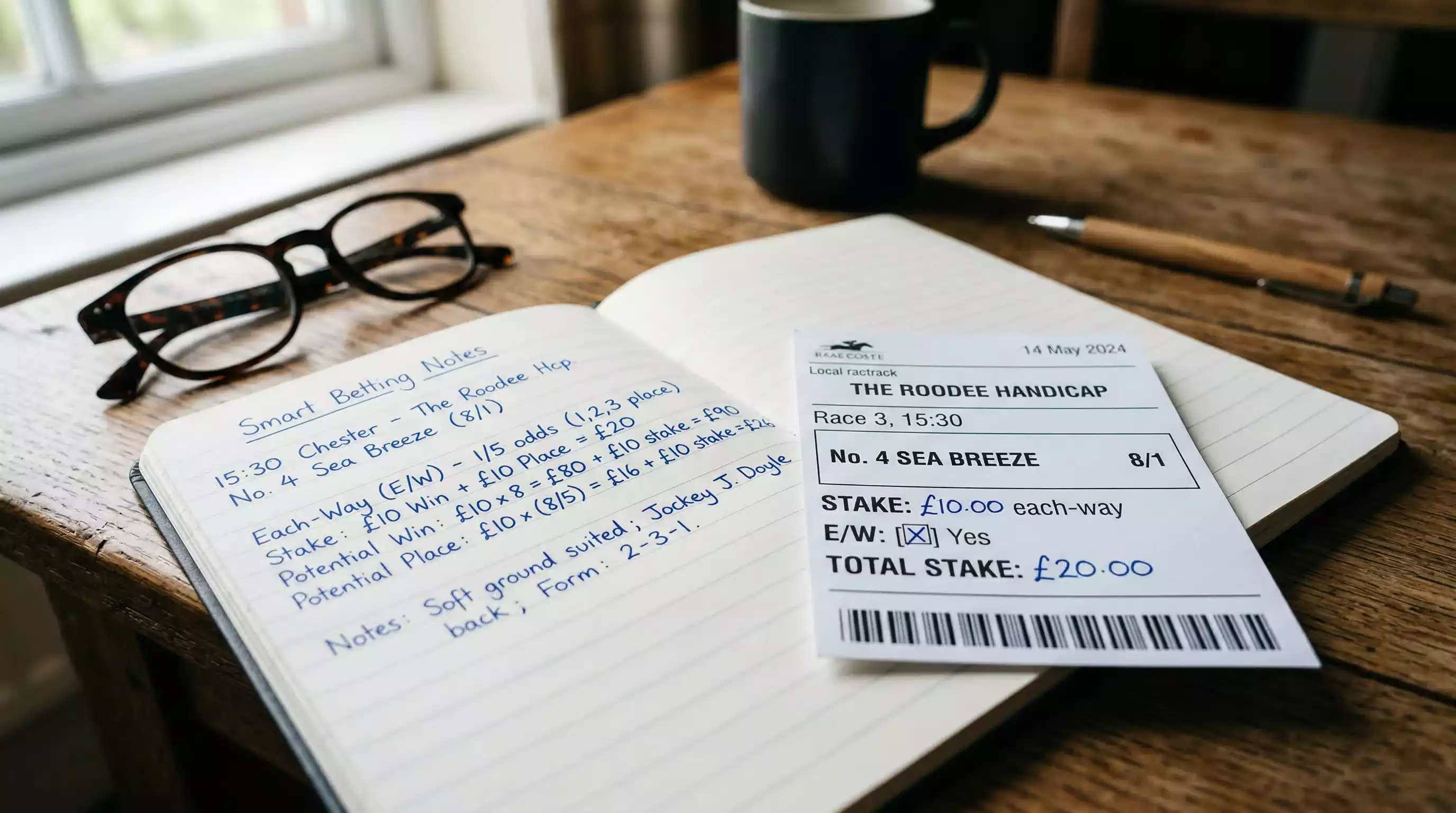
Let's say you back a horse at 20/1 each-way for £5. Your total outlay is £10 (£5 win, £5 place). The bookmaker pays four places at one quarter of the odds.
If your horse wins: The win part returns £5 × 20/1 = £100, plus your £5 stake back = £105. The place part returns £5 × (20/4) = £5 × 5/1 = £25, plus your £5 stake back = £30. Total return: £135 from a £10 outlay — a £125 profit.
If your horse finishes second, third, or fourth: The win part loses (−£5). The place part returns £30 as above. Total return: £30 from a £10 outlay — a £20 profit. Still a healthy result from a horse that didn't win.
If your horse finishes fifth or worse (on standard four-place terms): Both parts lose. You're down £10.
Now imagine the same bet with a bookmaker offering eight places at one quarter of the odds. Your horse finishes seventh at 20/1. The win part loses, but the place part still pays £30. That's the power of extended place terms — they turn a losing bet into a winning one. The difference between four and eight places in a 34-runner race is not trivial; it roughly doubles your chance of collecting on the place portion.
Why Each-Way Suits the Grand National
Three structural factors make each-way betting particularly effective here. First, the field size: up to 34 runners means longer average odds across the board, which inflates the place payout. Second, the attrition rate: the Grand National's four-mile-plus distance and 30 fences mean that a significant number of runners fall, unseat their rider, or pull up. Horses finishing in the places have often survived a war of attrition, not just outridden the field. Third, bookmaker competition: the National is the single biggest betting race of the year in Britain, and bookmakers compete fiercely for your custom by offering enhanced place terms, making each-way even more attractive.
The calculation changes at shorter odds. An each-way bet on the favourite at 4/1 returns far less on the place portion (4/4 = evens, or £5 at £5 stake = £10 back, net break-even on the place part if the total outlay is £10). Each-way truly shines on horses priced 10/1 and above, where the place fraction alone delivers meaningful profit. Given the Grand National's historical pricing, that describes most of the field.
Bookmaker Place Terms Compared
Not all each-way bets are created equal. The number of places a bookmaker pays — and the fraction of the win odds used for the place calculation — varies between operators and can change in the weeks leading up to the race. For the Grand National specifically, the industry standard is four places at 1/4 odds, but competitive pressure has pushed many bookmakers well beyond that baseline. In 2026, you should expect promotional offers extending to five, six, seven, or even eight places.
The table below shows typical Grand National each-way terms from major UK bookmakers. Note that these are based on recent years' promotions and may be updated as the 2026 race approaches — always confirm the current terms on the bookmaker's site before placing your bet.
| Bookmaker | Standard Places | Enhanced GN Places | Place Fraction | BOG Offered |
|---|---|---|---|---|
| bet365 | 4 | Up to 6 | 1/4 | Yes |
| William Hill | 4 | Up to 7 | 1/4 | Yes |
| Paddy Power | 4 | Up to 7 | 1/4 | Yes |
| Betfair Sportsbook | 4 | Up to 6 | 1/4 | Yes |
| Ladbrokes | 4 | Up to 5 | 1/4 | Yes |
| Coral | 4 | Up to 5 | 1/4 | Yes |
| Sky Bet | 4 | Up to 6 | 1/4 | Yes |
| Betfred | 4 | Up to 8 | 1/5 | Yes |
Pay attention to the place fraction column. Most bookmakers use 1/4 of the win odds for the Grand National, but some (notably Betfred in recent years) use 1/5. At first glance, eight places at 1/5 odds sounds better than six places at 1/4 odds — you're covered in more finishing positions. But the maths tells a more nuanced story. At 20/1, a 1/4 place fraction gives you 5/1 on the place; a 1/5 fraction gives you 4/1. If your horse finishes fifth or sixth, the eight-place offer wins because the 1/4 offer wouldn't have paid out at all. But if your horse finishes in the first four, the 1/4 fraction returns more per pound staked. The right choice depends on where you think your horse will realistically finish — and whether you're betting for protection or profit.
The single most important thing: check the terms before you bet. Bookmakers often announce their Grand National each-way specials in the fortnight before the race. A two-minute comparison can add real value to your bet without costing an extra penny.
How to Pick a Horse — Beyond Lucky Names
Let's get the uncomfortable truth out of the way: picking a Grand National winner is hard. Genuinely hard. The favourite has won just six times since 1999, and the average winning price of 18.7/1 tells you that the market — billions of pounds of aggregated opinion — gets it wrong far more often than it gets it right. But "hard" doesn't mean "random." There are patterns in the data, and understanding them won't guarantee a winner, but it will stop you betting blind.
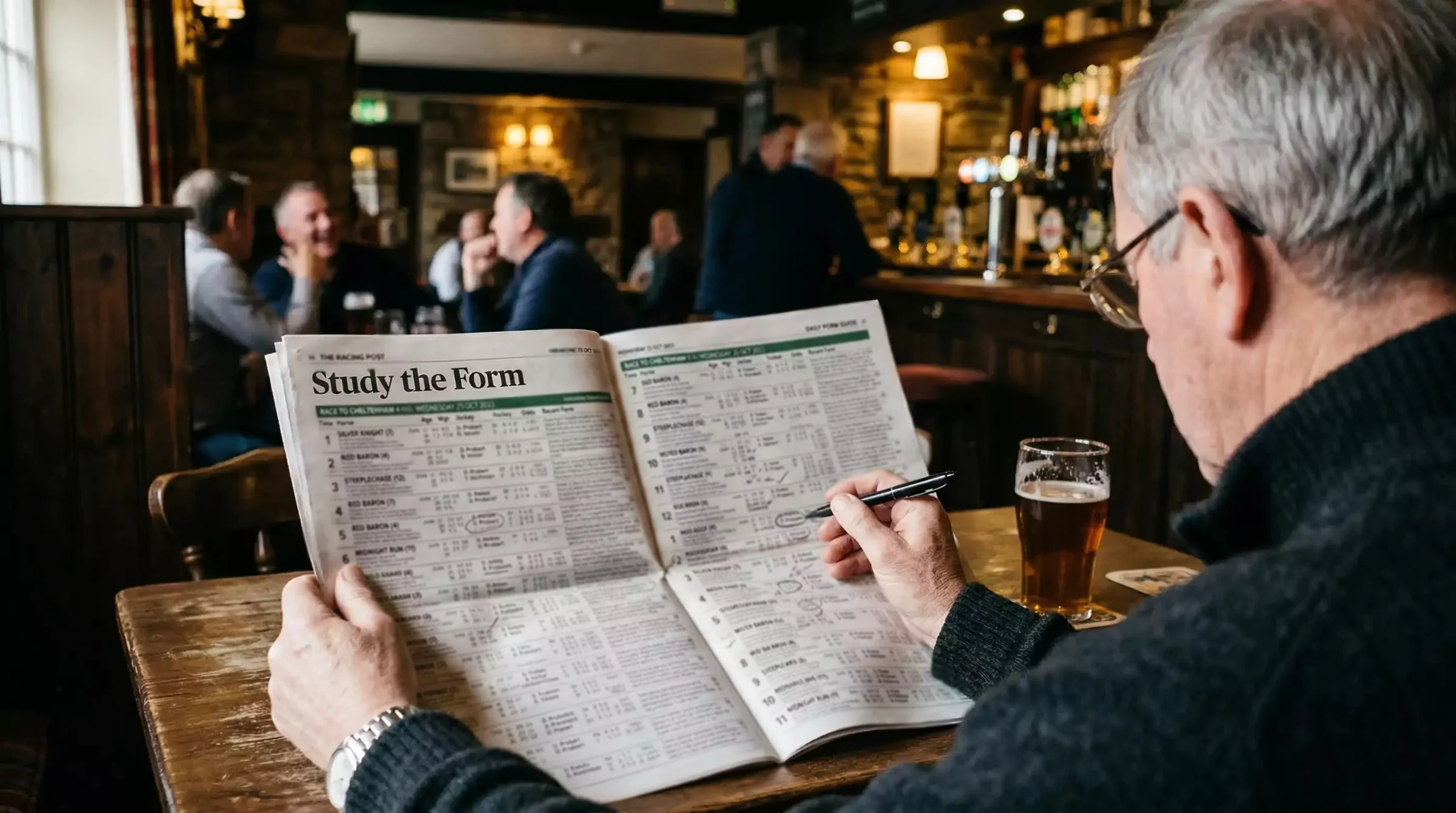
Reading the Form Line
Every horse in the Grand National has a form line — a string of numbers and letters summarising its recent race results. A form line reading 1P2341 tells you the horse finished first, pulled up, second, third, fourth, and first again in its last six runs, reading from left to right (oldest to most recent). The most recent result is the one on the far right. Key codes to know: F = fell, U = unseated rider, P = pulled up, R = refused. A horse with multiple F's or U's in its form has a jumping problem you should take seriously over 30 Grand National fences.
Look for horses that have been consistently finishing in the first four or five in competitive handicap chases. The Grand National is a Class 1 handicap, the highest grade, so form from lesser races carries less weight. Horses with a proven record at Aintree itself — either in previous Grand Nationals or in the Topham Chase and Becher Chase run over the same fences — deserve special attention.
Weight and the Handicap
Every Grand National runner carries an assigned weight, determined by the BHA handicapper based on official ratings. The top-rated horse carries the most weight (up to 11 stone 10 pounds), and weights decrease down the field. The handicapper's job is to level the playing field so that every horse, in theory, has an equal chance. In practice, mid-weight runners (around 10 stone 7 pounds to 11 stone) have the best recent record. Very top weights (11-6 and above) face a physically demanding task over four miles and 30 fences. Very low weights may lack the quality to compete at this level.
Age and Stamina
Grand National winners tend to cluster in the eight-to-ten age bracket. Younger horses (six or seven) may lack experience over big fences. Older horses (twelve and above) may lack the stamina to sustain effort over four miles two and a half furlongs. The sweet spot is a horse that has accumulated experience without losing its physical edge. Tiger Roll won at eight and nine; Corach Rambler at nine; I Am Maximus at nine. That's not a coincidence.
Going Preference
The ground at Aintree in April can range from good to soft depending on the weather. Some horses handle soft ground comfortably; others struggle. Check the going report on the morning of the race (published by Aintree) and cross-reference with your horse's form on similar ground. A horse with a string of good results on soft ground is a safer pick if the heavens open than one whose entire record is on fast, dry surfaces.
Putting It Together
"Given the open nature and big odds available across the field, we're expecting plenty of betting interest up and down the country and could see turnover on the race north of £150 million." — Lee Phelps, spokesperson, William Hill
That open nature is precisely why a structured approach matters. Here's a practical five-step filter: (1) eliminate horses with poor jumping records, (2) focus on those with form in competitive handicap chases, (3) favour the eight-to-ten age range, (4) check the going preference matches the expected ground, (5) lean toward mid-range weights with solid official ratings. This won't leave you with one horse — it'll leave you with four or five strong contenders, which is exactly where an each-way or dutching strategy becomes valuable.
And yes, plenty of winners have defied these filters. Noble Yeats won at 50/1 in 2022. The Grand National punishes certainty. But a systematic approach at least puts probability on your side, which is more than a name-based pick can claim.
How Grand National Odds Work
Odds are the language of betting, and the Grand National speaks it fluently. Every number attached to a horse's name is telling you something — about how likely the market thinks it is to win, how much you'll be paid if it does, and how much profit the bookmaker expects to extract. Learning to read odds properly transforms your betting from a lottery into a calculated decision.
Fractional Odds
The traditional British format. Odds of 10/1 (spoken as "ten to one") mean that for every £1 you stake, you receive £10 in profit if you win, plus your original stake back. So a £5 bet at 10/1 returns £55 (£50 profit + £5 stake). Odds of 5/2 mean £5 profit for every £2 staked — a £10 bet returns £35 (£25 profit + £10 stake). The key relationship: the first number is the profit; the second is the stake required to earn it.
Decimal Odds
Increasingly common on betting apps and favoured across Europe. Decimal odds represent the total return per pound staked, including the stake itself. Odds of 11.00 are equivalent to 10/1 fractional — a £5 bet returns £55. Odds of 3.50 are equivalent to 5/2. To convert fractional to decimal: divide the first number by the second and add 1. So 10/1 = (10 ÷ 1) + 1 = 11.00. Decimal odds make calculating returns simpler, especially for accumulators where you multiply the odds together.
The Overround: Where Bookmakers Make Their Money
If you added up the implied probabilities of every horse in a Grand National field (by converting each horse's odds to a percentage), you'd expect the total to be 100%. It won't be. It'll be somewhere between 120% and 145%, depending on the bookmaker and how competitive the market is. That excess — the overround — is the bookmaker's built-in profit margin. A 130% book means the bookmaker expects to keep roughly 23p of every pound staked, all else being equal.
The Grand National market, because it attracts such enormous volume, tends to have a lower overround than many races. Competition between operators drives efficiency. But it's still there, and it means that not every horse in the field is fairly priced. Some are slightly undervalued by the market; others are overvalued. Spotting the difference is what separates recreational betting from informed betting.
Horse Racing Betting and the UK Market
To put the Grand National in context: remote horse racing betting generated £766.7 million in gross gaming yield (GGY) during the financial year 2024–25, according to the Gambling Commission's annual industry statistics. That makes horse racing the second-largest sport for online betting in Britain, behind only football. The Grand National alone accounts for a disproportionate share of that total — a single Saturday afternoon generating more wagering than most sports manage in an entire month.
Best Odds Guaranteed and Starting Price
Two concepts worth understanding. Best Odds Guaranteed (BOG) means if you take a price on your horse and the Starting Price (SP) — the official odds at the moment the race begins — is higher, the bookmaker pays you at the better price. It's a free upgrade, and virtually every major UK bookmaker offers it for the Grand National. Starting Price itself is determined by on-course bookmakers at Aintree and is the official settlement price for bets placed without specifying odds. If you bet at SP, you accept whatever price the market settles on as the tape goes up. Historically, taking an early price with BOG has been the more profitable strategy for Grand National punters, because prices often drift upward as money enters the market on the day.
Where Your Bet Money Actually Goes
When you hand over a fiver at the bookmakers or tap "confirm bet" on your phone, that money doesn't simply sit in a corporate vault until someone wins. It enters an ecosystem that has funded British horse racing for over two centuries. Understanding where it goes adds a layer of meaning to even the smallest flutter — and explains why the industry fights so hard to keep betting legal, regulated, and onshore.
The Betting Levy
Since 2017, every licensed bookmaker in Britain has been required to pay a statutory levy of 10% of their gross gaming yield (GGY) from horse racing. This money goes to the Horserace Betting Levy Board (HBLB), which distributes it to the racing industry. In the 2024–25 financial year, the levy generated a record £109 million — the highest since the reformed system was introduced, according to the HBLB Annual Report 2024–25. That money funds prize money (which keeps owners and trainers in the sport), horse welfare programmes, veterinary science, racecourse improvements, and the integrity services that police doping and corruption.
The levy mechanism creates a direct financial link between your bet and the health of the sport. Every pound wagered on the Grand National contributes, albeit indirectly, to the prize fund that attracts top horses to the race, the welfare standards that protect them, and the infrastructure that keeps 59 racecourses operating across Britain.
"In the UK, racing and betting have a unique interdependency that goes back over 200 years. A day at the races includes, for most participants, betting on horse races as well." — European Commission, State Aid Clearance Statement, cited in Parliamentary evidence
The Broader Economic Footprint
Horse racing's economic contribution extends well beyond prize money. The industry generates direct revenues exceeding £1.47 billion and makes a total annual contribution to the UK economy of £4.1 billion when induced effects are included, sustaining approximately 85,000 jobs, as reported by the British Horseracing Authority in submissions to the DCMS. These aren't just stable lads and jockeys — the figure encompasses breeding, training, veterinary services, racecourse hospitality, media, and the betting industry itself.
The Grand National's own economic footprint is outsized relative to a single race. A study by Liverpool Business School estimated the economic impact of Grand National Day on the local Liverpool economy at over £60 million, covering hospitality, transport, retail, and tourism. Aintree's three-day festival brings tens of thousands of visitors to Merseyside, filling hotels and restaurants across the city.
Where the Bookmaker's Margin Goes
After paying out winners, the bookmaker retains the overround — the built-in margin discussed in the odds section. From that margin, the operator pays the 10% racing levy, 21% remote gaming duty to HMRC, staff costs, technology, marketing, and compliance with the Gambling Commission's increasingly stringent regulations. Licensed betting also contributes to responsible gambling programmes, research, and treatment through voluntary and statutory contributions. The regulated betting industry as a whole pays approximately £4.2 billion in taxes and levies annually, and channels roughly £350 million back into racing through sponsorship, media rights, and the levy combined, according to an EY economic impact assessment for the BGC.
This is worth remembering when you hear debates about gambling regulation. Tighter rules, higher taxes, or affordability checks that push punters toward unlicensed offshore operators don't just reduce bookmaker profits — they reduce the funding that flows to racing, welfare, and the public purse. The balance between regulation and revenue is one of the most contested questions in British sport today.
Aintree Legends: Moments That Shaped the Grand National
The Grand National has been producing stories that reshape betting behaviour since before most bookmakers existed. Some moments are famous for their drama; others matter because they changed rules, altered public perception, or demonstrated statistical truths that punters still rely on today. Here are three that every bettor should know — not as trivia, but as context for how the modern race works.
Red Rum is the only horse to have won the Grand National three times (1973, 1974, 1977), and he finished second in the other two years he competed. His dominance was so complete that it shaped modern handicapping — the BHA now assigns weights specifically designed to prevent any single horse from dominating the race in the way Red Rum did. His third win, at the age of twelve, also set expectations about age that took decades to correct; modern data shows the sweet spot is eight to ten, not the veteran range Red Rum inhabited.
In 1967, a loose horse named Popham Down caused a pile-up at the 23rd fence, bringing down nearly the entire field. Only one horse, Foinavon, was far enough behind to avoid the carnage. He picked his way through the chaos and won at odds of 100/1 — the longest-priced winner in Grand National history. The fence was renamed in his honour. For bettors, the lesson is structural: the Grand National's unique hazards mean that any horse still standing in the final mile has a chance, regardless of form or price. It's why each-way betting at long odds carries genuine value here in a way it doesn't in most races.
Tiger Roll's back-to-back victories in 2018 and 2019 were the first since Red Rum to capture consecutive Grand Nationals, and they came at starting prices of 10/1 and 4/1 respectively. His 2019 victory made him the shortest-priced winner in modern Grand National history. What's less discussed is that racecourse attendance across Britain hit 5.031 million in 2025 — the first time the figure exceeded five million since 2019, according to the BHA's 2025 Racing Report. The sport Tiger Roll helped popularise is seeing its crowds return, even as the way people bet on it shifts increasingly online.
Safety and the Modern Race
The Grand National has faced serious scrutiny over horse welfare, and the race has changed substantially as a result. The fences have been modified multiple times — most significantly before the 2013 running — to reduce the severity of falls. The field size was capped at 40 and reduced to 34 from 2024 onwards. Veterinary oversight has been expanded, and the course design at Aintree now includes bypass options at certain fences. These changes haven't removed the risk entirely — the race remains the toughest test in British jump racing — but they've reduced fatalities and improved safety standards to a degree that would be unrecognisable to punters watching in the 1990s.
For bettors, the safety reforms have a practical consequence: the race now has a higher completion rate than it did historically. Fewer fallers mean more finishers, which means the each-way market is slightly more predictable. A horse that would have been brought down in a pile-up twenty years ago now has a better chance of completing the course. It's one more reason why each-way value on mid-priced runners has become the strategy of choice.
A Sensible Staking Plan for Once-a-Year Punters
Here's the paradox of Grand National betting: it's the one race where millions of people who never usually gamble decide to have a flutter, yet almost nobody approaches it with a plan. They pick a horse, stick a tenner on it, and hope. There's nothing wrong with that — the social element is half the fun — but a small amount of structure can make the same budget go further and the experience more satisfying, regardless of the result.

Set a loss limit before you bet. Decide how much you're comfortable losing — not how much you hope to win — and treat it as an entertainment budget. Once it's gone, it's gone. The entire Grand National betting market is built on the understanding that most individual bets will lose. That's the mathematical reality of a 34-runner race where the average winner starts at nearly 19/1. A sensible plan doesn't eliminate losing; it manages it.
The data supports a modest approach. The overwhelming majority of Grand National wagers come in at £5 or under — stakes that reflect the event's identity as a social occasion rather than a serious gambling exercise. Around half of the race's total betting turnover is built from those small, individual flutters.
"Millions of us are going to come together, from all walks of life, to have a bet on the Grand National. It is the nation's punt, the one time many go and place a bet in their local bookies and enjoy the thrill of horse racing with friends and family." — Michael Dugher, former CEO, Betting and Gaming Council
The 80/20 Approach
One framework that works well for occasional punters: allocate 80% of your budget to lower-risk bets (each-way on two or three well-researched selections) and 20% to a speculative punt (a long-shot win bet, a small forecast, or a novelty market). If your total budget is £20, that's £16 on each-way bets — say, two £4 each-way bets (costing £8 each) on horses you've filtered using form, weight, and going — and £4 on a fun long-shot at 33/1 or higher. The each-way portion gives you a realistic chance of a return; the speculative portion gives you the dream.
Fixed Stake vs Percentage Stake
A fixed-stake approach means betting the same amount on each selection regardless of odds. A percentage-stake approach adjusts the bet size based on confidence or odds — staking more on a selection you feel strongly about, less on a speculative outsider. For a once-a-year event like the Grand National, fixed staking is simpler and harder to get wrong. Percentage staking is better suited to punters who bet regularly and have a track record to calibrate their confidence levels.
Using Promotions Wisely
Free bets, enhanced odds, faller insurance, and extra each-way places are genuine value tools if you use them on selections you'd have backed anyway. They become traps if they lure you into bets you wouldn't otherwise make. A £5 free bet on a horse you fancy is pure upside. A £20 deposit to unlock a free bet you don't really want is a marketing cost, not a saving. Read the terms — minimum odds requirements, wagering conditions, and expiry dates all matter. The spring 2026 promotional season for the Grand National is already competitive, with most major bookmakers having announced their offerings by March.
Whatever your approach, the point of a plan is the same: it turns a random punt into a considered one, and it makes the race more enjoyable to watch. When your horse is jumping Becher's Brook for the second time and you know exactly why you backed it, that's a better experience than hoping a name you picked from a hat survives the Canal Turn.
Common Questions About Grand National Betting
What is an each-way bet on the Grand National?
An each-way bet is two bets in one: half your stake goes on the horse to win, and half goes on it to finish in a place position (typically the top four, five, six, or more finishers, depending on the bookmaker's terms for the Grand National). If your horse wins, both parts pay out. If it finishes in a place but doesn't win, the place part pays at a fraction of the win odds — usually one quarter for the Grand National. For example, a £5 each-way bet at 20/1 costs £10 total. If the horse places, the place portion returns £5 at 5/1 (one quarter of 20/1) = £30, for a £20 net profit. Each-way is the dominant bet type for the Grand National because the large field, long odds, and extended place terms make the place portion genuinely valuable.
How many places do bookmakers pay on the Grand National?
The industry standard for the Grand National is four places at 1/4 of the win odds, but most major bookmakers offer enhanced terms specifically for this race. In recent years, operators have paid between five and eight places on the Grand National as a promotional incentive. The exact number varies by bookmaker and is usually confirmed in the two to three weeks before the race. Always check the place terms on your bookmaker's site before placing an each-way bet — the difference between four and eight places roughly doubles your chance of collecting on the place portion in a 34-runner field. A comparison of typical terms from major operators is included in the Bookmaker Place Terms section of this guide.
How do I pick a horse for the Grand National?
Start with the basics: form, weight, age, and going preference. Look at each horse's recent results in competitive handicap chases — a form line with consistent top-five finishes is a good sign. Favour horses aged eight to ten, carrying a mid-range weight (around 10-7 to 11 stone), and with proven ability on the expected ground conditions at Aintree. Eliminate horses with poor jumping records (repeated falls or unseated riders in their form). After filtering, you'll typically have four to six strong contenders — at which point an each-way bet across two or three of them, or a dutching strategy, gives you coverage across the field. The full filtering method is detailed in the How to Pick a Horse section of this guide.
Betting Responsibly on the Grand National
Gambling should be entertainment, not a financial strategy. The Grand National's status as a national event can blur the line between a fun flutter and overspending. If you find yourself chasing losses, betting more than you planned, or feeling anxious about the outcome, take a step back.
Every licensed UK bookmaker is required to offer responsible gambling tools. These include deposit limits (daily, weekly, or monthly caps on how much you can add to your account), loss limits, reality checks (periodic reminders of how long you've been betting and how much you've spent), time-outs (short breaks from your account), and self-exclusion (a longer-term block, typically six months to five years). These tools are accessible from your account settings and can be activated in seconds.
For a more comprehensive block, GamStop is the UK's national self-exclusion scheme. Registering with GamStop prevents you from using any licensed online gambling site in Britain for a minimum of six months. It's free and can be set up at gamstop.co.uk.
It's worth noting the seasonal dimension. The Gambling Commission's GSGB survey found that participation in horse racing betting rose to 7% of adults during April to July 2025 — the window covering Cheltenham and the Grand National — compared to just 4% in the January-to-April period. The same seasonal pattern holds for 2026. That seasonal surge means more people are betting who don't normally bet, which is precisely the group most at risk of spending beyond their comfort zone. If the Grand National is your one bet of the year, set a budget before you start and treat any winnings as a bonus, not an expectation.
If gambling is causing problems for you or someone you know, the National Gambling Helpline is available on 0808 8020 133 (freephone, 24 hours). You can also access support through GamCare at gamcare.org.uk and the charity GambleAware at begambleaware.org.
