
 Available in US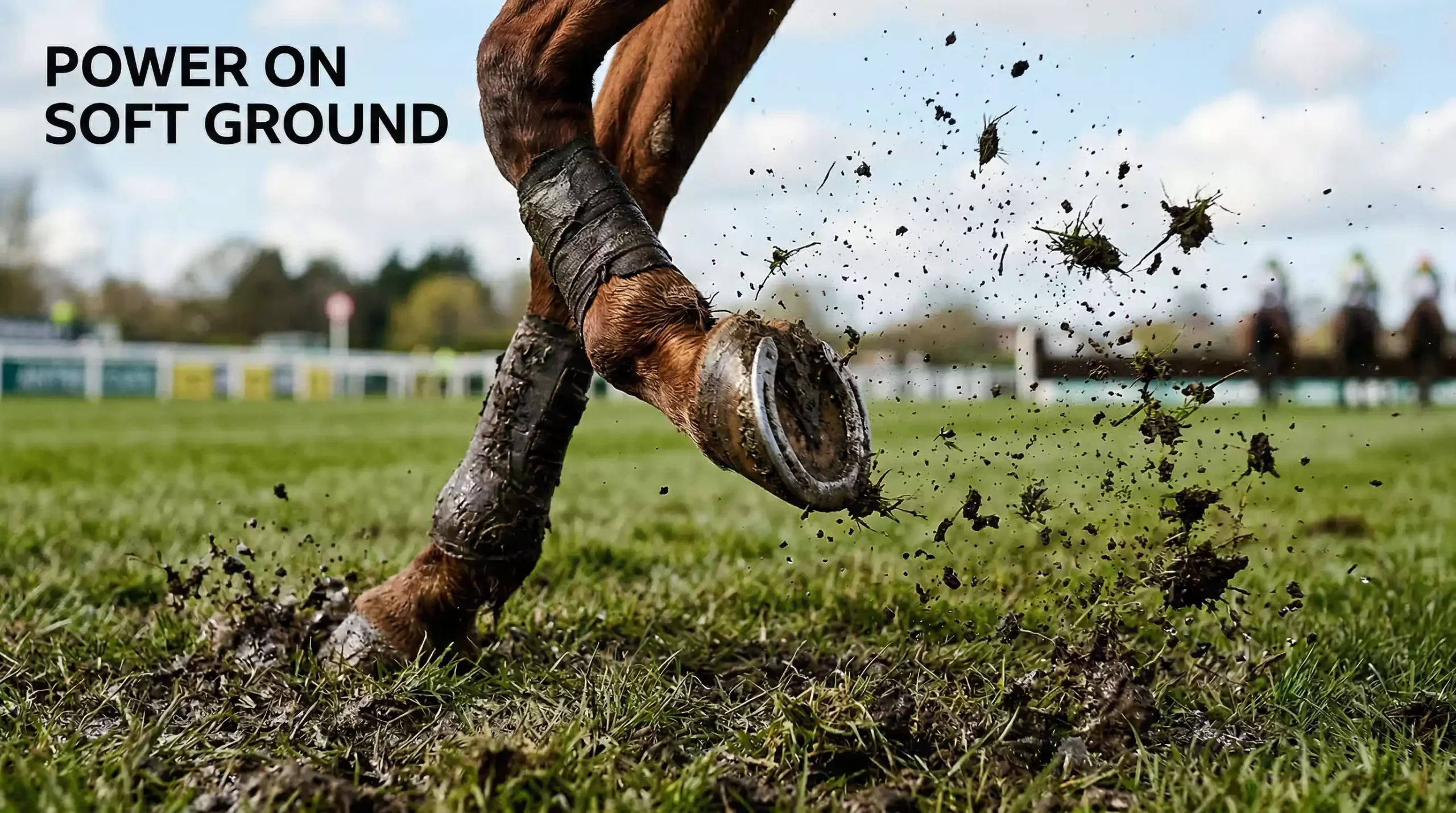
The going at Aintree is the last major variable to settle before the Grand National, and it can reshape the betting market overnight. A horse that looks a serious contender on good ground may become an afterthought if the heavens open and the course turns soft. Another that was drifting in the market might suddenly shorten when the ground comes up in its favour. Going conditions affect which horses finish, which horses win, and — critically for bettors — which horses represent value. How Going Conditions Affect Grand National Betting — More on this topic at grand national place a bet.
Unlike weight and age, which are known weeks before the race, the official going is not confirmed until close to race time. That late-breaking uncertainty is what makes it both a risk factor and an opportunity for anyone willing to pay attention.
The Going Scale: From Hard to Heavy
British racing uses a standardised going scale that describes the condition of the ground underfoot. From firmest to softest, the descriptions are: hard, firm, good to firm, good, good to soft, soft, and heavy. The going is assessed by the clerk of the course using a penetrometer — a device that measures how far a weighted probe sinks into the turf — and by walking the course to check conditions at different points.
For the Grand National, the going typically falls somewhere between good and soft. Aintree in April benefits from spring rainfall but is usually not waterlogged in the way that midwinter courses can be. Hard ground is rare and undesirable — it jars horses’ legs on landing, increasing injury risk over 30 fences. Heavy ground, while possible after prolonged rain, is equally unusual in mid-April and produces a slow, attritional race that tests stamina to the extreme.
Good to soft is often described as the ideal Grand National going. It provides enough cushion to protect legs on landing while remaining firm enough for horses to maintain a reasonable gallop. When the going is described as good to soft, the field tends to be at its largest — fewer late withdrawals due to ground preference — and the finishing times sit in the range that rewards both jumping ability and stamina without excessively penalising horses that prefer quicker ground.
The going is not uniform across the entire course. The landing side of Becher’s Brook can ride softer than the rest of the track because of the drop, while the ground near the stands — which gets more foot traffic and is more exposed to drying wind — can ride faster. The clerk of the course may describe the going differently at different points, and experienced trainers walk the course on the morning of the race to make their own assessments.
How the Going Changes the Race
Soft or heavy going fundamentally alters the physical demands of the Grand National. Every stride requires more effort to pull the hoof out of yielding ground. Over four miles and two furlongs, that additional effort accumulates into a significant energy drain that affects horses differently depending on their build, stride length, and running style.
Front-runners — horses that lead from the start and try to control the pace — suffer most on soft ground because they are working hard from the outset on ground that offers no respite. Hold-up horses — those ridden patiently in the rear before making a late challenge — tend to fare better because they conserve energy while the pace-setters burn theirs into the mud. The finishing speed differential between soft and good ground can be thirty seconds or more over the full distance, and the last half-mile on heavy ground frequently produces drama as tired leaders are swallowed by closers who have timed their run.
Soft ground also increases the number of fallers. Horses tire earlier, misjudge takeoff points because their hind legs slip on approach, and land more heavily because the ground absorbs less impact cleanly. A race on good ground might see five or six fallers across 30 fences. The same race on heavy ground might see ten or twelve. For bettors, this increases the randomness of the outcome — which can be a positive factor for longer-priced selections, as the attrition thins the field and gives lesser-fancied runners a better chance of finishing in the places.
More than 5 million people attended British racecourses in 2025, with the Aintree Festival attracting some of the largest single-day crowds of the year. For the tens of thousands at the track on Grand National day, the going is immediately obvious — they can feel it underfoot. For the millions watching on television or following on their phones, the going is a data point that needs interpreting rather than experiencing.
How to Check the Going Before You Bet
The official going at Aintree is published by the Jockey Club, which operates the racecourse, and updated as conditions change. An initial going report is typically issued on the Monday of Grand National week, with updates on Wednesday, Thursday, and a final update on the morning of the race.
The BHA’s own reporting tracks the relationship between going conditions and betting activity across British racing. Total betting turnover on British racing during the first nine months of 2025 declined by 4.2% compared to the same period in 2024, with the BHA noting that weather patterns and their effect on ground conditions contributed to variable field sizes throughout the year. At Aintree specifically, the going report has a direct influence on late withdrawals: trainers pull horses that do not handle the prevailing conditions, which can alter the shape of the race and the betting market in the final 48 hours.
Weather forecasts for the Liverpool area in the week before the Grand National are the best leading indicator of likely going conditions. A dry week preceded by a wet March might produce good to soft ground. A wet week will push the going towards soft. Aintree has a drainage system and can water the course to add moisture if conditions are too firm, but it cannot dry the course if heavy rain arrives late.
For bettors, the practical sequence is: check the going report on Wednesday when final declarations are made, reassess on Friday after Ladies Day — by which point the ground has been raced on and the Saturday forecast is more accurate — and confirm on Saturday morning before placing your final selection. If you have placed an ante-post bet on a horse with a known soft-ground preference and the going comes up good to firm, that is information worth acting on — either by hedging with a second selection or simply managing your expectations.
Matching the Going to Your Selection
Every horse has a going preference, and it is recorded in their form. The form line for any runner will include a letter or abbreviation indicating the going conditions for each of their previous races: G for good, S for soft, GS for good to soft, and so on. A horse that has won twice on soft ground and never finished in the first four on good ground has a clear preference. Ignoring that preference because you like the horse’s name or its jockey is a reliable way to waste your stake.
The simplest approach is to wait for the going to be confirmed, then check whether your shortlisted horses have a record that matches. If the going is soft and your preferred selection has never run on soft, reconsider. If the going is good and your selection has three wins on good ground from five attempts, that is a positive correlation worth factoring into your confidence level. See also Grand National Fences.
Going preference is not absolute. Some horses act on any ground. Others are extreme specialists who only perform on one surface. Most sit somewhere between: they have a preference but can adapt. For the Grand National, where the going can vary across different parts of the course and can change during the race itself if it rains, adaptability is as valuable as a strong preference. A horse that handles good to soft and soft is more likely to cope with the variable conditions at Aintree than one that has only ever raced on good ground and folded the one time it encountered give underfoot.
