 Available in US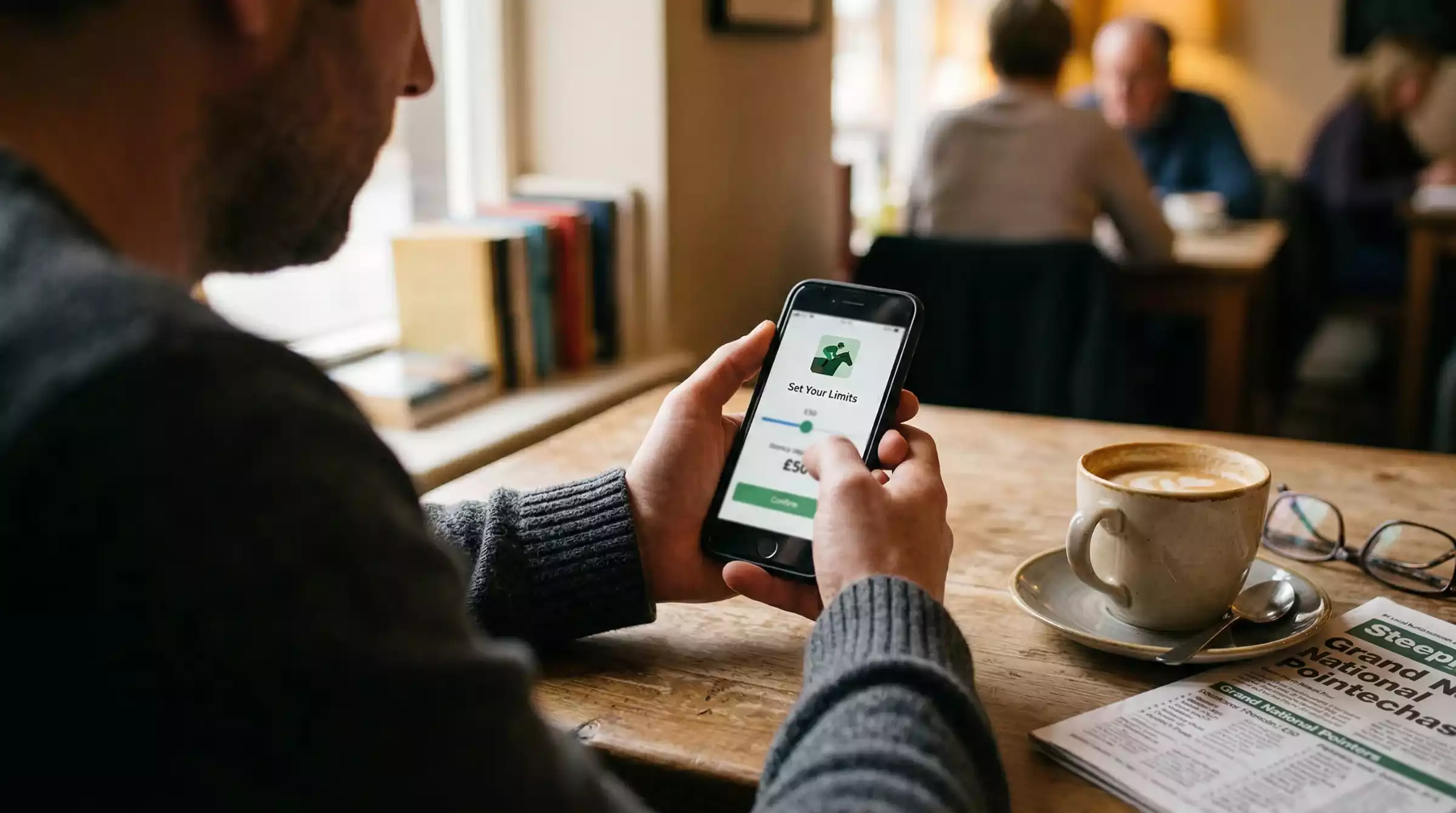
Responsible gambling is not a footnote. Every bookmaker is required by law to display the phrase, and most Grand National betting pages reduce it to a line of small text — 18+, GambleAware.org, please gamble responsibly — that punters scroll past without reading. The tools that sit behind that slogan are considerably more useful than the slogan itself. Deposit limits, reality checks, cooling-off periods, and self-exclusion schemes exist specifically to help people stay in control when the excitement of a race like the Grand National makes it easy to lose perspective. Responsible Gambling at the Grand National — More on this topic at grand national place a bet.
This is not a moral lecture. It is a practical guide to the controls available to anyone betting on the Grand National, whether you are placing a £5 each-way or managing a larger budget across the Aintree Festival.
Tools Available to Every Bettor
Every UK-licensed bookmaker is required to offer a suite of responsible gambling tools. These are not optional extras — they are conditions of the operator’s licence, enforced by the Gambling Commission. The tools are available on every app and website, typically accessible through the account settings menu.
Deposit limits allow you to set a maximum amount that you can deposit into your betting account over a given period — daily, weekly, or monthly. Once the limit is reached, no further deposits are accepted until the next period begins. A limit reduction takes effect immediately. A limit increase, by contrast, requires a cooling-off period of 24 hours before it becomes active, preventing impulsive decisions during a losing streak.
Reality checks are timed prompts that appear while you are using a betting app, reminding you how long you have been active and how much you have spent. You can set the interval — every 15 minutes, 30 minutes, or 60 minutes — and the notification will pause your activity until you acknowledge it. On Grand National day, when you might be logged into a betting app for several hours across the festival card, a reality check is a useful circuit-breaker.
Session time limits go a step further, automatically logging you out of the app after a preset duration. Cool-off periods allow you to temporarily suspend your account for 24 hours, 48 hours, seven days, or 30 days. During the cool-off period, you cannot log in, place bets, or deposit funds. The account reopens automatically when the period expires.
From 28 February 2025, the Gambling Commission lowered the trigger for light-touch financial vulnerability checks to £150 in net deposits within any 30-day period. Previously set at £500, this threshold means that operators now perform automated background checks on a wider range of customers, using publicly available data to identify signs of financial distress such as bankruptcy orders or county court judgments. The checks are designed to be frictionless — most customers will never know they have been run — but they represent a significant expansion of the regulatory safety net around betting activity.
Affordability Checks: What They Mean for You
The affordability check system has been one of the most debated regulatory developments in British gambling. For Grand National punters, the practical effect depends on how much you deposit and how often you bet.
If you are a once-a-year bettor depositing £10 or £20 for your Grand National wager, the checks will almost certainly not affect you. The £150 threshold over 30 days is well above a typical casual deposit. If you are a more regular bettor who has deposited across multiple races in the weeks before the Grand National, you may already have triggered the light-touch check without being aware of it.
The Gambling Commission’s Gambling Survey for Great Britain found that participation in horse race betting reached 7% of adults during the April-to-July period — the window that covers the Grand National and Royal Ascot — up from 4% in the January-to-April wave. That seasonal spike means a significant number of people concentrate their betting activity into a short period, and the current regulatory framework is designed to monitor that concentration without unnecessarily impeding the millions of casual punters who engage responsibly.
If a vulnerability check identifies a concern, the bookmaker may contact you to request additional information. This can feel intrusive, particularly if you are betting well within your means, but it is a regulatory requirement applied uniformly rather than a judgement about your personal finances. The industry’s position, articulated by the British Horseracing Authority in its quarterly reports, is that these checks have contributed to “fewer larger staking customers” participating in the market, with some shifting their bets to unregulated operators where no such checks exist.
When to Seek Help
The Grand National is an event that generates enormous excitement, and for most people, a modest bet enhances that excitement without any negative consequences. But gambling-related harm is real, it is well-documented, and it does not discriminate by income, age, or experience level.
Signs that betting may be moving beyond entertainment include: spending more than you budgeted, chasing losses by placing additional bets to recover money already lost, borrowing money to bet, feeling anxious or preoccupied by betting outcomes, or hiding the extent of your betting from people close to you. If any of these apply, the responsible step is to use the tools described above — set a deposit limit, activate a cool-off period — and consider reaching out to a support service.
GamStop is the national self-exclusion scheme for online gambling. Registering with GamStop blocks you from all UK-licensed online gambling sites for a minimum of six months. The registration is free, takes a few minutes, and is enforced across all operators. It is not a permanent decision — you can choose to reactivate after the exclusion period — but it provides a firm, enforceable boundary that cannot be circumvented by willpower alone.
The National Gambling Helpline, operated by GamCare, offers free, confidential advice by phone and online chat. It is staffed by trained advisors who understand the specific dynamics of gambling-related harm and can direct you to local support services, counselling, and financial guidance.
Gambling Harm in Context
Horse racing betting is, by several measures, among the lower-risk forms of gambling. The Social Market Foundation’s 2025 report on gambling taxation described single bets on horse racing as the least harmful type of gambling activity, particularly when compared to online slots, which involve rapid, repetitive play with high loss rates. The Grand National, as an annual event with a finite duration and a natural endpoint, carries a different risk profile from products designed for continuous engagement. See also Grand National Betting and the Black Market.
That does not mean the risk is zero. A once-a-year flutter that stays within budget is harmless entertainment. A once-a-year flutter that escalates — prompted by a loss, a near-miss, or the availability of credit on a betting account — can become the starting point for something more problematic. The tools exist to prevent that escalation. Using them is not a sign of weakness. It is the mark of someone who understands that staying in control is the prerequisite for enjoying the race.
