
 Available in US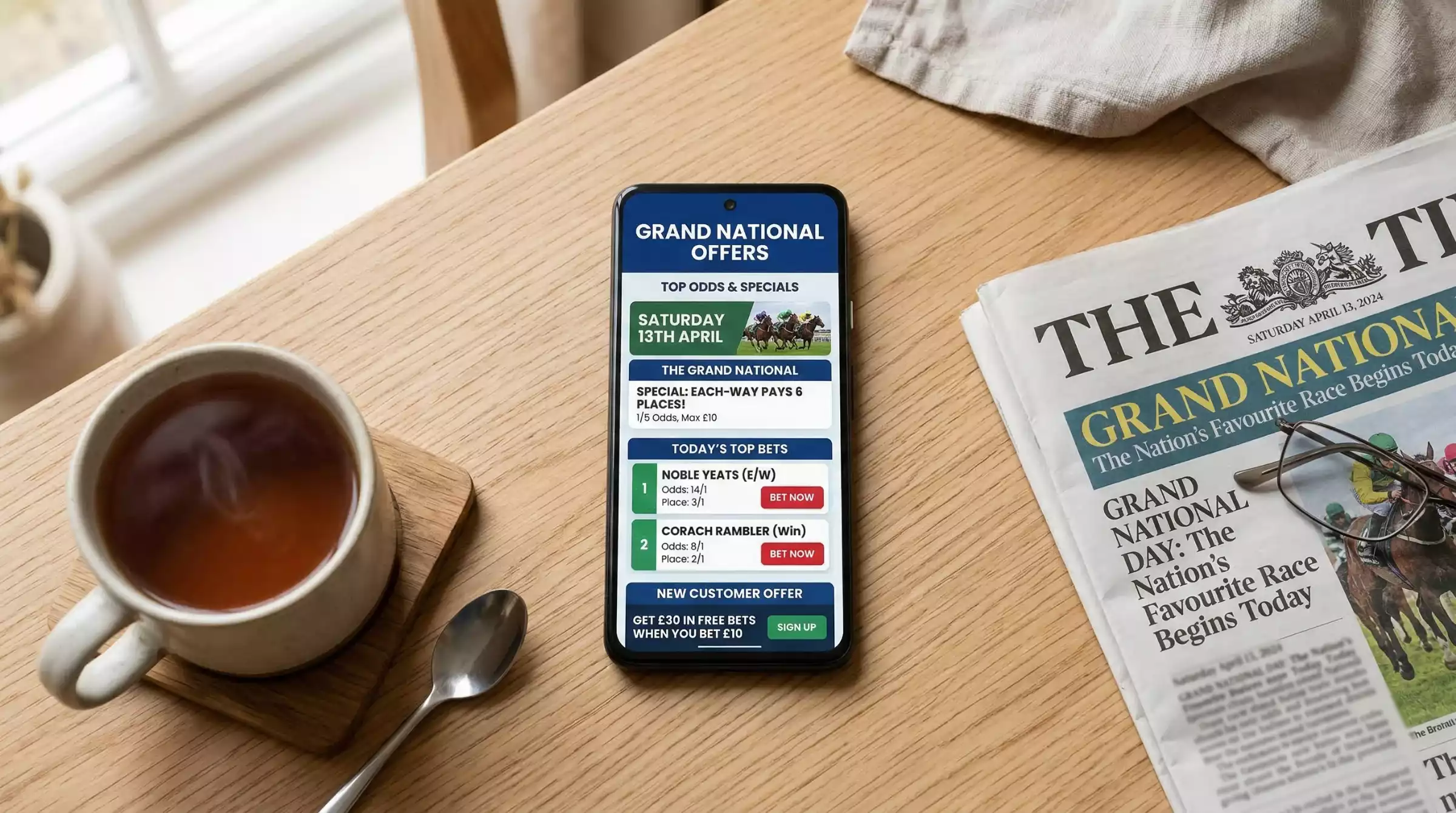
Every bookmaker in Britain wants your Grand National bet. The race attracts millions of customers who do not bet at any other time of year, and operators know that the punter they sign up in April might still be placing bets in December. That is why Grand National free bets and sign-up offers are among the most generous in the betting calendar — and why understanding how they actually work is worth more than the headline figure suggests. Grand National Free Bets and Betting Offers 2026 — More on this topic at grand national place a bet.
The offers change every year and vary between operators, but the structures repeat. Knowing the difference between a matched deposit and a bet-and-get, spotting the wagering requirements hidden in the small print, and timing your sign-up correctly can turn a promotional gimmick into a genuinely useful addition to your Grand National budget.
Types of Grand National Betting Offers
The most common Grand National free bet structure is the bet-and-get. You open a new account, place a qualifying bet — typically £5 or £10 at minimum odds of 1/2 or higher — and the bookmaker credits your account with free bets once the qualifying bet has settled. The free bet value is usually two to four times the qualifying stake: bet £10, get £30 or £40 in free bets. The free bets are often split across multiple tokens — three or four separate £10 bets — and come with an expiry window of seven days.
Matched deposit offers work differently. You deposit a set amount and the bookmaker matches it, either as free bets or as bonus funds. The distinction matters. Free bets return only the profit if they win — the stake is not included in the payout. Bonus funds typically need to be wagered a certain number of times before they can be withdrawn. A £20 bonus with 5x wagering requirements means you need to place £100 in qualifying bets before the bonus converts to withdrawable cash.
Enhanced odds promotions appear in the days immediately before the Grand National. A bookmaker might boost a horse from 16/1 to 25/1 for new customers, with the enhanced portion paid as free bets. These look attractive but often carry maximum stake limits — sometimes as low as £1 or £2 — and the enhanced winnings are paid in free bet tokens rather than cash. The headline return is real, but the path to collecting it involves more steps than the advert implies.
According to data from the Betting and Gaming Council, around 30% of people who bet on the Grand National are depositing into a betting account for the first time or placing their first wager since the previous year’s race. These are exactly the customers that free bet offers are designed to attract, and the volume of new sign-ups around Grand National week creates intense competition between operators. That competition works in the punter’s favour — as long as you read the terms before you commit.
Reading the Terms That Actually Matter
Every free bet offer comes with terms and conditions, and the terms that matter most are not the ones printed in large type. The headline — “Bet £10 Get £40 in Free Bets” — tells you what you receive. The small print tells you what you can actually do with it.
Minimum odds on the qualifying bet are the first thing to check. Most offers require your initial bet to be placed at odds of 1/2 (1.5) or higher. If you place your qualifying bet on a heavy favourite at 1/3, the offer will not trigger, and you will have spent your qualifying stake without receiving the free bets. For the Grand National, this is rarely an issue — almost every runner is priced above 1/2 — but it matters if you are placing the qualifying bet on a different race during the Aintree Festival.
Free bet expiry is the second critical detail. Seven days is standard, which means free bets credited after the Grand National on Saturday must be used by the following Saturday. If you are genuinely a once-a-year bettor with no interest in other racing, those free bets may go unused. Some operators offer longer windows — 14 or 30 days — but this is less common for Grand National-specific promotions.
Stake-not-returned is the third detail that changes the maths. When a free bet wins, most bookmakers return only the profit, not the free bet stake itself. A £10 free bet placed at 5/1 returns £50, not £60. This is standard practice and applies to the vast majority of free bet offers, but it is worth factoring into your expectations. A £40 package of free bets does not give you £40 of spending power in the way that £40 of cash does — its effective value depends on the odds at which you use the tokens.
Payment method restrictions are an increasingly common condition. Several operators exclude deposits made via e-wallets like PayPal, Skrill, or Neteller from qualifying for the welcome offer. Debit card deposits are almost universally accepted. If you habitually use an e-wallet for online transactions, check this before depositing.
Getting the Most From Your Grand National Offer
The simplest way to maximise a free bet offer is to treat the qualifying bet and the free bets as separate decisions with different objectives. The qualifying bet should be placed at odds that meet the minimum requirement while giving you a genuine interest in the race — your actual Grand National selection, placed each-way, is usually the most natural qualifying bet.
The free bet tokens are then best used on longer-priced selections where the stake-not-returned mechanic has less impact on your percentage return. A free bet placed at 2/1 returns a profit equal to the token value. A free bet placed at 10/1 returns a profit of ten times the token value. The expected value of a free bet increases with odds, which makes the Grand National — a race where 20/1 and 33/1 shots have a realistic chance — an unusually good event for deploying free bet tokens.
The regulated betting industry contributes substantially to British racing: members of the Betting and Gaming Council fund horseracing to the tune of £350 million annually through sponsorship, media rights, and the betting levy, according to an EY economic impact assessment. Free bet promotions are part of the commercial engine that sustains that flow. Using them wisely is not gaming the system — it is participating in it as designed.
When to Sign Up — and When Not To
Timing your account registration matters more than most people realise. Several bookmakers temporarily freeze or reduce their welcome offers in the days immediately surrounding the Grand National, knowing that the race itself will drive sign-ups regardless. The most generous offers tend to be available in the two to three weeks before the race, when operators are actively competing for early sign-ups rather than relying on race-day urgency.
Opening your account during Cheltenham Festival week — which falls in March, three to four weeks before the Grand National — is a particularly effective strategy. You gain access to the welcome offer immediately, can use it across Cheltenham if the terms allow, and have your account ready and funded for Grand National day without last-minute registration hassles. Bookmaker websites and apps can slow significantly under Grand National day traffic, and having your account already set up eliminates that friction. See also Grand National Sweepstake Kit.
One tactical consideration: if you intend to use multiple bookmakers to compare odds and place terms on the Grand National, stagger your sign-ups. Open one account at each of two or three operators in the weeks before the race, place the qualifying bets at each, and you will have free bet tokens available from multiple sources by race day. This is entirely within the terms of service — bookmakers design these offers expecting exactly this behaviour — and it gives you the flexibility to place your Grand National selections wherever the best combination of odds, place terms, and promotions happens to be.
