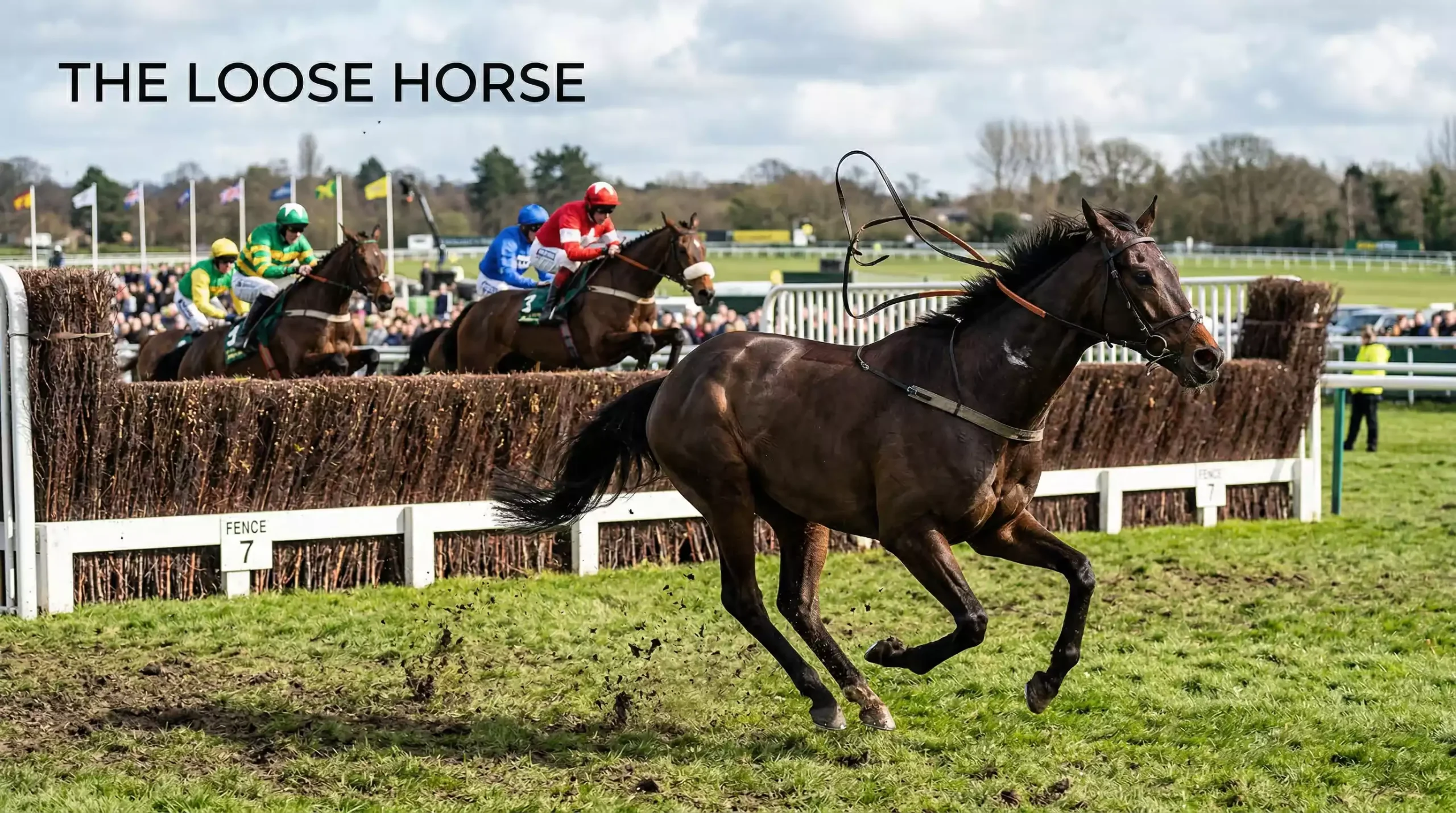
The Grand National is the only major horse race where your selection can be travelling well, jumping cleanly, and then come down at the 22nd fence because the horse in front fell and left no room to avoid the wreckage. It happens. It happens every year. And faller refund offers exist because bookmakers know that losing your stake to a fall — rather than being beaten on merit — is the most frustrating outcome in racing.
A faller refund returns your stake, typically as a free bet, if your horse falls, is brought down, or unseats its rider during the Grand National. It is insurance for the unpredictable — and in a race where double-digit fallers are routine, the insurance has a non-trivial probability of being triggered.
How Faller Refunds Work
The mechanics vary by bookmaker, but the core proposition is consistent. If your Grand National selection fails to complete the race due to falling, being brought down by another horse, or unseating its rider, the operator refunds your stake. The refund is almost always issued as a free bet token rather than cash, meaning the stake-not-returned rule applies if you use the token on another bet. A £10 faller refund free bet placed at 5/1 returns £50 profit if it wins — not £60.
Faller refunds do not cover every scenario where your horse fails to finish. A horse that is pulled up by its jockey — slowed down and withdrawn from the race because it is tired, struggling, or no longer competitive — is not a faller. A horse that refuses to jump a fence is not a faller. A horse that runs out (deviates from the course) is not typically covered either. The trigger is specifically a fall, a brought-down, or an unseated rider. These are defined by the official race stewards, and the bookmaker uses the stewards’ classification to determine eligibility.
Some operators extend faller refunds beyond falls to include all horses that do not complete the course, regardless of the reason. This broader definition is more generous and covers pulled-up horses as well as fallers. It is less common, and when offered, it tends to carry tighter conditions — lower maximum refund amounts or a requirement to opt in before the race.
Comparing Bookmaker Faller Offers
Faller refund terms for the Grand National are typically announced in the week before the race, and they differ across operators in several important ways.
Maximum refund is the first variable. Some bookmakers cap the faller refund at £10, others at £25, and a few offer uncapped refunds on all qualifying bets. If your Grand National stake is £5 each-way (£10 total), a £10 cap covers you fully. If you are betting larger amounts, the cap matters.
Qualifying bet type is the second variable. Most faller refunds apply to win and each-way singles only. Accumulators, forecasts, and tricasts are typically excluded. If you are placing a straight each-way bet — which describes the vast majority of Grand National wagers — you are covered. If your Grand National selection is one leg of a multi-bet, the faller refund almost certainly does not apply.
Refund format is the third variable. Free bet tokens are the standard, but some operators refund as bonus credit with wagering requirements, while a small number refund in cash. The difference is significant: a £10 cash refund is worth £10. A £10 free bet is worth somewhat less, because the stake is not returned on a winning bet. A £10 bonus with 3x wagering requirements is worth less again, because you need to stake £30 before the bonus converts.
With an estimated £250 million wagered on the 2025 Grand National, faller refunds represent a material promotional cost for bookmakers — but also a material source of customer goodwill. Losing your stake because your horse was brought down at Becher’s Brook is the kind of experience that turns a first-time punter into a never-again punter. The faller refund softens that blow and keeps the relationship intact.
Beaten by a Nose: Related Refund Offers
Some bookmakers extend the insurance principle beyond fallers to include narrow defeats. A beaten-by-a-nose refund returns your stake as a free bet if your horse finishes second by a head or less. In the Grand National, where the run-in from the last fence to the winning post is nearly 500 yards, horses frequently change positions in the final strides. A horse that leads over the last and is caught on the line — as Crisp was by Red Rum in 1973, as Sunnyhillboy was by Neptune Collonges in 2012 — triggers a beaten-by-a-nose refund that at least partially compensates for the agony.
Since 1999, only six pre-race favourites have won the Grand National — a record that underlines how frequently the result confounds expectations. The beaten-by-a-nose refund is relevant precisely because of this unpredictability: in a field of 34, any number of horses could be involved in a tight finish, and the consolation of a stake refund on a horse that came agonisingly close is worth having. Details of historical winners and their odds are maintained by specialist resources such as GrandNational.fans.
A Fine Print Checklist Before You Bet
Before placing your Grand National bet with faller refund protection in mind, verify the following with your chosen bookmaker.
Is the faller refund automatic or does it require opt-in? Some operators apply the refund to all qualifying Grand National bets by default. Others require you to tick a box, enter a code, or place the bet through a specific promotional page. Missing the opt-in step means missing the refund, even if your horse falls.
Does the refund apply to your bet type and stake? Confirm that your each-way single is eligible and that your stake falls within the refund cap. If the cap is £10 and your total each-way stake is £20, only half is covered.
When does the free bet expire? Faller refund tokens typically carry a seven-day expiry. If you are a once-a-year bettor with no intention of placing another wager after the Grand National, the free bet will expire unused — making the refund effectively worthless to you. In that case, a bookmaker that refunds in cash, however rare, is a better choice.
BGC chief executive Gráinne Hurst has warned that balanced regulation and a stable tax regime are essential to maintaining the kind of competitive promotions — including faller refunds — that benefit punters. As she put it, the government “must guard against overbearing regulations which risk driving punters into the arms of illegal operators.” The implication for Grand National bettors is practical: faller refunds, beaten-by-a-nose offers, and other protective promotions exist because the regulated market competes for your business. Using them is not merely sensible — it is one of the concrete advantages of betting with licensed operators.