
 Available in US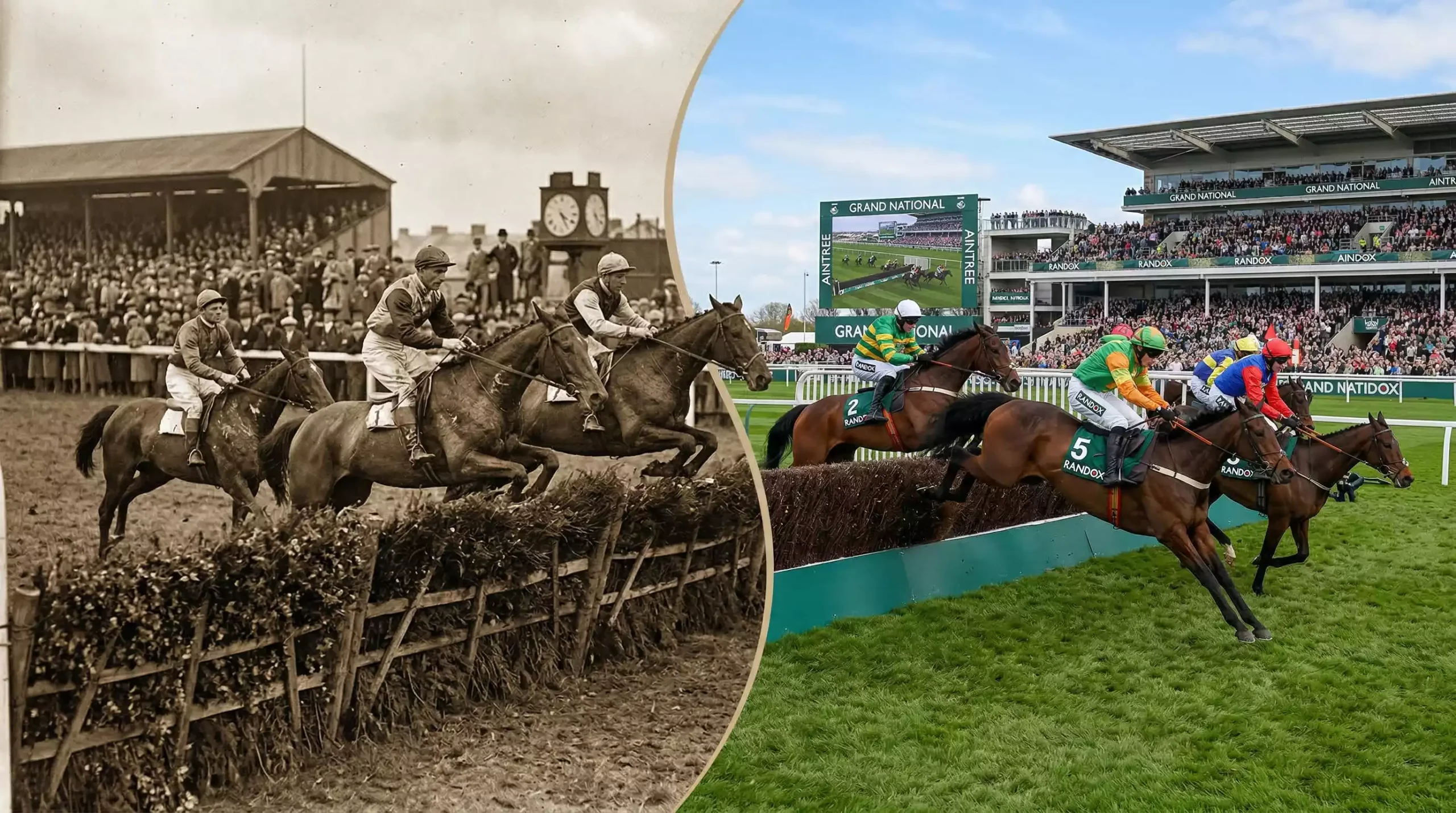
The Grand National has been run since 1839, which gives it nearly two centuries of stories to draw on — and a history of rule changes, dramatic finishes, and improbable outcomes that directly shapes the race you bet on today. The field size reduction, the fence modifications, the safety protocols: none of these exist in a vacuum. They are responses to specific events that forced the sport to adapt. Understanding those events does not just make you a more informed racegoer. It makes you a more informed punter, because the Grand National’s past explains its present structure and, by extension, its betting dynamics. Grand National History — More on this topic at grand national place a bet.
These are the stories that shaped the race.
Origins and the Early Grand National
The race we now call the Grand National was first run at Aintree in 1839, though a precursor event took place at the course in 1836. The original race was a cross-country steeplechase in the literal sense: horses started on the edge of the racecourse and raced over open countryside, jumping whatever hedges, gates, and ditches lay in their path. Posts and rails were erected at two brook crossings to provide identifiable obstacles, but the rest of the course was the natural landscape of the Lancashire countryside.
The field in that first race was small — seventeen runners — and the distances between obstacles were irregular. There was no handicap. The fastest, bravest horse won. It was not until 1843 that handicapping was introduced, requiring each horse to carry a weight determined by an official assessor. That single rule change transformed the Grand National from a straightforward test of ability into a puzzle of handicapping, where the best horse does not always win — and where an outsider carrying a light weight can outrun a champion burdened with lead.
Handicapping is the reason the Grand National remains a betting race rather than a formality. Without it, the highest-rated horse would win most years and the odds would be short and uninteresting. With it, the field is compressed, the prices are long, and the outcome is genuinely uncertain. Every bet you place on the Grand National is, in a sense, a bet on the accuracy of the handicapper’s assessment — and on whether your horse can outperform it.
The Results That Became Legends
Certain Grand National results transcended the sport and entered British popular culture. They are worth knowing not for nostalgia but because they illustrate patterns that recur in the race’s modern betting markets.
Red Rum’s three victories in 1973, 1974, and 1977 — with two seconds in between — remain the most extraordinary Grand National record ever compiled. His 1973 win, overhauling the exhausted Crisp on the run-in after trailing by fifteen lengths at the last fence, demonstrated two things that remain true today: the Grand National run-in is long enough to change any result, and front-runners carrying big weights (Crisp shouldered 12st) are vulnerable to closers with lighter burdens.
Foinavon’s victory in 1967 at 100/1 showed what happens when chaos strikes a large field. A loose horse caused a pile-up at the 23rd fence, and Foinavon, lagging so far behind that his jockey had time to steer around the carnage, cleared the fence and cantered home. The lesson for bettors is not to back 100/1 shots on the off chance of a pile-up — it is that the Grand National’s large field and unique fences create conditions where extraordinary things can happen, and the each-way bet exists precisely to capture those fringe outcomes.
Tiger Roll’s back-to-back wins in 2018 and 2019 were the first repeat success since Red Rum and confirmed that course experience carries enormous value at Aintree. A horse that has jumped these fences before, and handled the unique demands of the race, has a quantifiable edge over a first-timer. The race’s global audience reflects the scale of these moments — approximately 600 million viewers across 140 countries tune in annually, making it one of the most watched sporting events on earth.
Safety Reforms That Changed the Betting Landscape
The Grand National’s history includes periods of serious concern about horse welfare. Multiple fatalities in the 1990s and 2000s prompted sustained pressure from animal welfare organisations and eventually led to significant changes in how the race is run — changes that directly affect the betting market.
The most impactful reform was the reduction of the maximum field size from 40 to 34 runners, implemented from the 2024 Grand National onwards. Fewer horses means less crowding at fences, fewer interference-related falls, and a marginally more predictable race. For bettors, it means a smaller field to analyse and slightly shorter odds on each runner, since the probability of any individual horse winning increases when there are six fewer competitors.
Fence modifications have been ongoing since the late 2000s. The landing side of Becher’s Brook has been levelled to reduce the severity of the drop. The cores of several fences have been softened to make them more forgiving of jumping errors. The overall effect has been a reduction in the number of fallers per race, which in turn has made the Grand National slightly more form-dependent and slightly less random. Horses with proven jumping ability — rather than simply those with luck — are more likely to complete the course than they were twenty years ago.
These changes have not eliminated the Grand National’s unpredictability. They have shifted the balance from chaos towards controlled difficulty. The racing industry’s economic significance — the BHA has stated that British horseracing contributes £4.1 billion to the UK economy annually and supports 85,000 jobs — means that the sport has both the resources and the motivation to continue improving safety while preserving the spectacle that makes the Grand National unique.
How History Informs Your Betting
The practical takeaways from the Grand National’s history are specific and actionable. The run-in is long enough to reverse any result, which means horses with strong finishing kicks are valuable — especially at long odds where the each-way place terms apply. Course experience matters more than at any other race in the calendar, which means previous Grand National runners deserve extra weight in your analysis. And the handicap is the defining mechanism of the race: it compresses ability gaps, extends the price range, and creates the conditions under which 18/1 is the average winning price over a decade. See also Cheltenham Form as a Grand National Betting Indicator.
The Grand National has always been a race where history repeats in patterns rather than specifics. The details change — different horses, different jockeys, different years — but the underlying dynamics are remarkably stable. Knowing those dynamics, and knowing where they come from, is a genuine advantage when the field lines up at Aintree.
