The Grand National sweepstake is the entry point for people who have no interest in studying form, comparing odds, or understanding what each-way means. You put a pound or two into the pot, draw a horse at random, and spend eight minutes on a Saturday afternoon either cheering wildly or pretending you never cared. It requires no skill, no research, and no betting account. It also happens to be the reason an estimated 13 million adults across Britain engage with the Grand National each year — because for many, the sweepstake in the office kitchen is the only flutter they have.
Running one well is slightly more involved than it looks. With 34 runners in the field and most workplaces having fewer than 34 willing participants, the draw needs managing. Fairness, clear rules agreed in advance, and a sensible approach to the surplus horses are the ingredients that keep the sweepstake entertaining rather than contentious.
How a Grand National Sweepstake Works
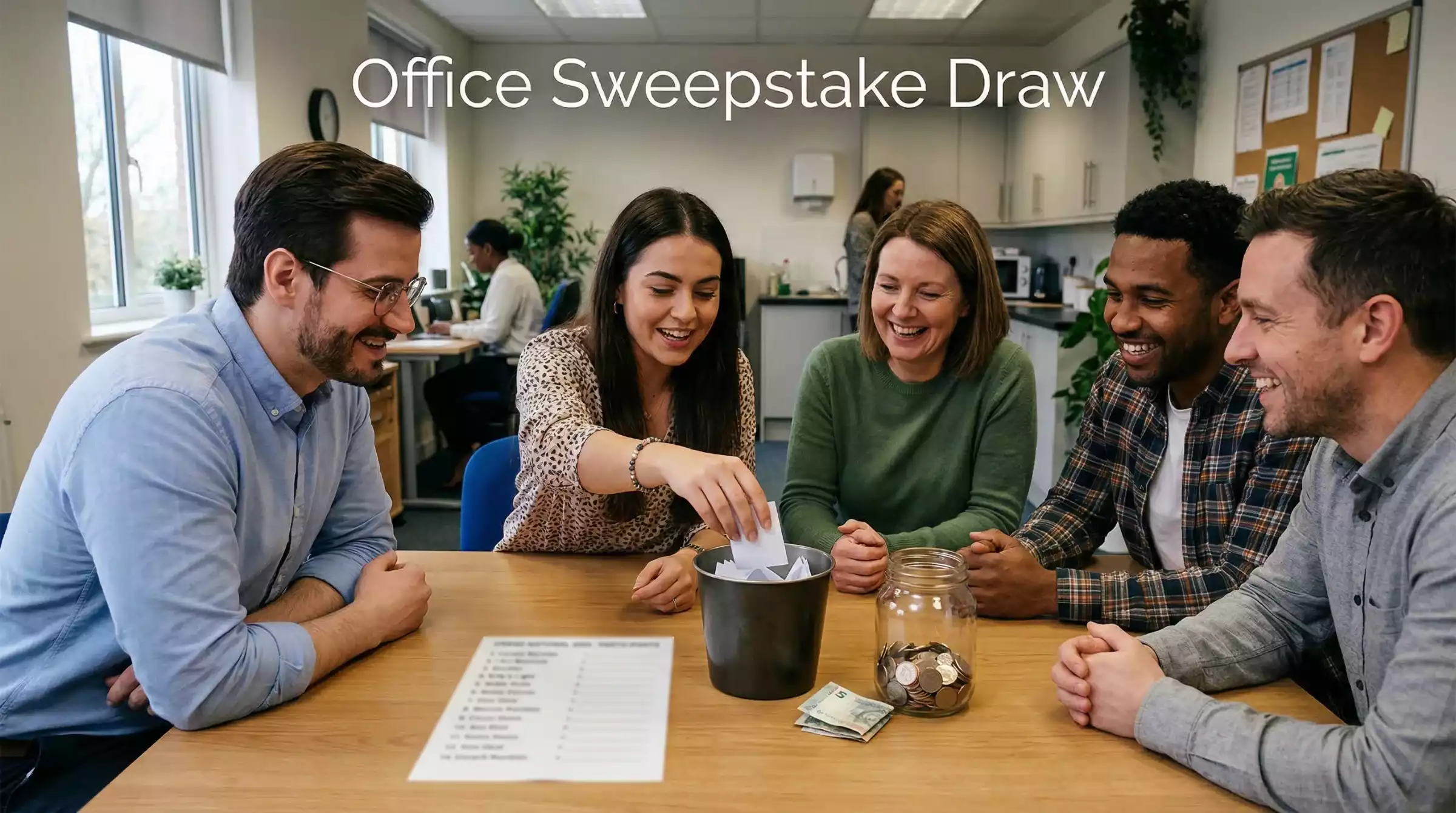
The format is deliberately simple. Each participant pays a fixed entry fee — £1, £2, or £5 are the most common amounts. The names of all 34 Grand National runners are written on individual slips of paper, folded, and placed into a hat, bag, or bowl. Participants draw one horse each at random. If the drawn horse wins the Grand National, the person holding that slip wins the majority of the pot. Smaller prizes for second and third are standard.
The total pot is determined by the number of participants multiplied by the entry fee. Twenty people at £2 each creates a £40 pot. The typical split is 60% to first, 25% to second, and 15% to third — so £24, £10, and £6 in this example. Some sweepstakes also award a token prize for last place, which adds a layer of dark comedy when someone’s horse refuses at the first fence and technically never finishes at all.
The draw must happen after the final declarations are confirmed. For the 2026 Grand National, final declarations close on Wednesday 8th April, with the race itself on Saturday 11th April. Drawing names before declarations risks including horses that are subsequently withdrawn — which creates arguments, wastes slips, and generally defeats the purpose of the exercise. Wait until Thursday morning at the earliest.
Rules and Fairness
The most common source of dispute in a Grand National sweepstake is what happens when there are more horses than participants. With 34 runners and, say, 20 people in the draw, 14 horses are unallocated. There are three standard approaches.
The first is a second round of draws. After everyone has one horse, the remaining slips go back into the hat and participants draw again. This gives some people two horses while others have one, which can feel uneven — but since the horses are drawn at random, the second draw is no more or less likely to contain the winner than the first. To keep it fair, the order of the second draw should reverse: the person who drew last in round one draws first in round two.
The second approach is simply to discard the surplus horses. Only 20 of the 34 runners are allocated, and if the winner comes from the undrawn 14, nobody wins the top prize. This feels unsatisfying but has the virtue of giving every participant exactly the same number of chances. Some organisers roll the unclaimed winner’s share into a charity pot or a post-race drinks fund.
The third approach, less common but increasingly popular, is to sell the surplus horses at a flat rate — say, 50p each — to participants who want a second or third draw. This tops up the prize pool and ensures every horse has a stakeholder. The downside is that it advantages people willing to spend more, which can undermine the egalitarian spirit of the thing.
Whichever method you choose, announce it before the first draw. Post-draw rule changes are the fastest way to turn a lighthearted social event into a workplace tribunal.
Running the Draw: Step by Step
The practical logistics of a sweepstake are harder to get wrong than you might think, but a few steps prevent the obvious pitfalls.
First, confirm the final list of runners. The Grand National is broadcast to roughly 600 million people across 140 countries, and the confirmed runners are published widely on the Thursday before the race. Use the official Aintree or racing information sites for the definitive list — not a newspaper preview from the previous week, which may include horses that have since been withdrawn.
Second, prepare the slips. Write or print each horse’s name clearly on a separate piece of paper. Fold them identically so nobody can identify a horse by the size or shape of the slip. If you are feeling conscientious, use a printed template rather than handwriting — it removes any suggestion that certain slips are distinguishable by pen pressure or ink colour.
Third, collect the entry fees before the draw. This avoids the situation where someone draws a 50/1 outsider, decides they are not interested, and walks away without paying. Money in the pot first, hand in the hat second.
Fourth, conduct the draw in a common area with all participants present, or at minimum visible via video call if your team is remote. Transparency is the entire mechanism of trust in a sweepstake. A draw conducted in private by the organiser, no matter how honest, invites suspicion.
Fifth, record the results. A shared spreadsheet, a photo of the draw sheet pinned to the noticeboard, or a message in the group chat — any format works as long as everyone can see who has which horse. This becomes relevant when someone claims they had the winner and nobody can remember.
Variations Worth Considering
The basic format works perfectly well, but a few variations add flavour without adding complexity.
An each-way sweepstake mirrors the most popular bet type on the race itself. Instead of paying only the top three, you pay the top six — matching the extended place terms some bookmakers offer. The prize distribution flattens: perhaps 35% to first, 20% to second, 15% to third, and 10% each to fourth, fifth, and sixth. This keeps more people interested for longer during the race, which is half the point.
A charity sweepstake donates a percentage of the pot — typically 10-20% — to a nominated cause. As former BGC chief executive Michael Dugher once observed, “600 million people from all over the world tuned in to watch one of the best Grand Nationals ever, including millions in the UK on ITV.” That global audience speaks to the cultural weight of the event, and channelling part of the sweepstake pot toward a good cause connects the office to something larger than the race itself.
A last-place prize is the simplest variation and often the most entertaining. Award a token amount — or a novelty forfeit — to the person whose horse finishes last of those that complete the course. This gives the no-hopers a reason to cheer, even if the cheering is ironic. In a race where anything can happen and routinely does, the person holding the 100/1 outsider deserves their moment too.