
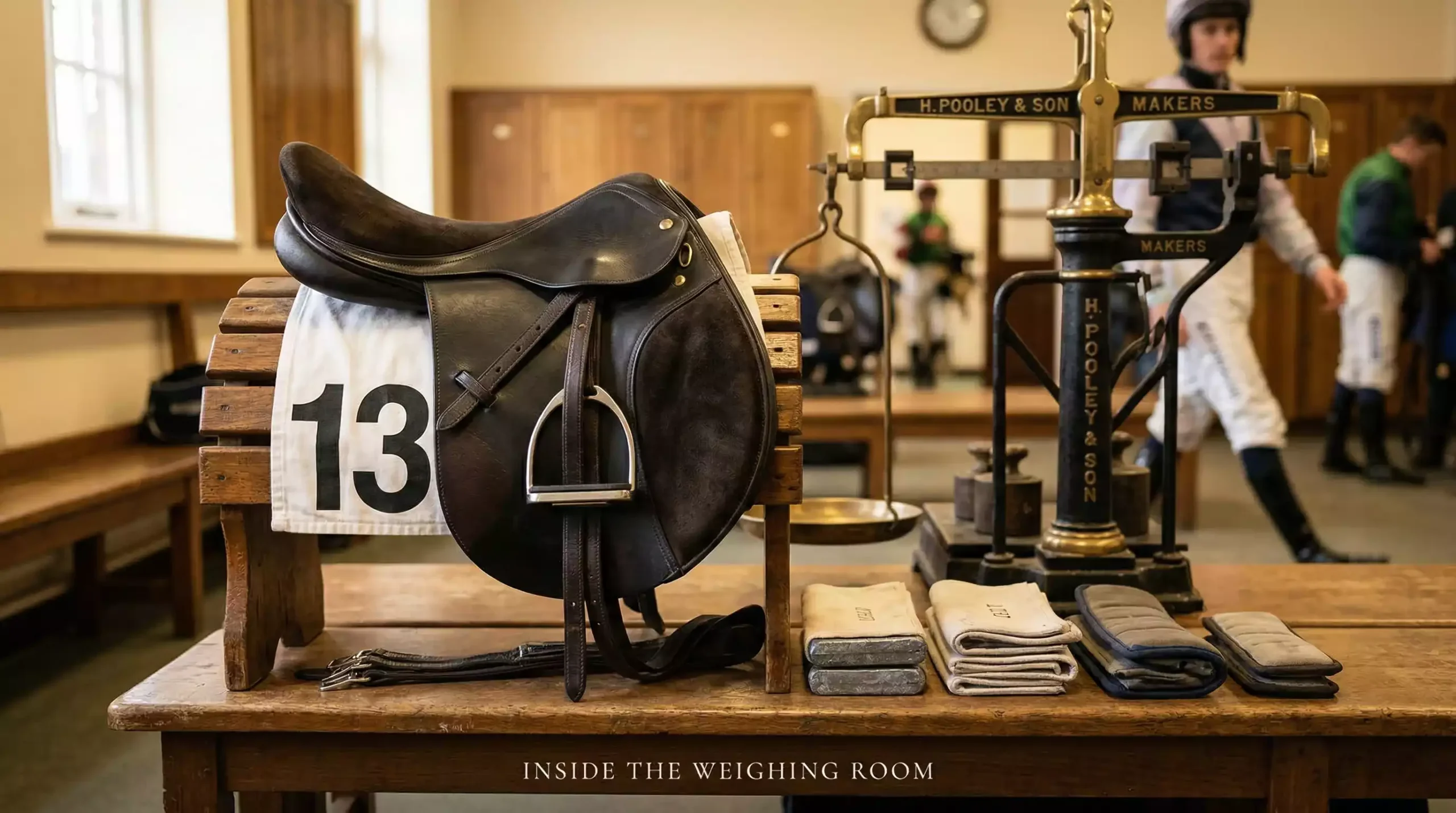
The Grand National is a handicap. That single word defines the entire betting puzzle. Every horse in the field carries a different weight, assigned by the official handicapper to reflect its assessed ability. The best horse carries the most. The weakest carries the least. In theory, the handicap levels the field so that any of the 34 runners can win. In practice, the weight data from the past decade tells a more specific story — and it is one that consistently points punters away from the top of the handicap.
Grand National weight trends are not a crystal ball. But they are a filter, and in a race this open, any filter that removes even a handful of improbable winners from your shortlist is doing useful work.
A Decade of Winning Weights
The pattern from the last ten Grand Nationals is strikingly consistent. Only three winners in that span carried more than 10st 13lb: I Am Maximus in 2024 at 11st 6lb, Tiger Roll in 2019 at 11st 5lb, and Many Clouds in 2015 at 11st 9lb. The other seven winners all carried 10st 13lb or less, and several carried significantly less — Corach Rambler won in 2023 at 10st 4lb, and Rule The World took the 2016 race at 10st 7lb.
No horse has won the Grand National carrying top weight since the early 2000s. The top-weighted runner is, by definition, the horse the handicapper considers the most talented in the field. That horse also faces the most punishing physical task: carrying the heaviest burden over four miles and two furlongs of the most demanding steeplechase course in Britain. Over 30 fences and a distance that exhausts even lightly-weighted runners, every extra pound accumulates. Legs tire faster. Jumping becomes less precise. The finishing effort, where races are won and lost in the final half-mile, becomes harder to sustain.
The data from these ten years narrows the viable weight range to roughly 10st 0lb to 11st 0lb, with occasional exceptions at the upper boundary. Horses carrying 11st 5lb or more have won, but they needed to be genuinely exceptional animals — Tiger Roll was a dual winner, I Am Maximus was arguably the best horse in training over fences that season. Backing a heavily weighted runner means betting that you have identified the next exceptional animal. Backing one in the lower weight band means betting on the probability that the handicap system works as intended and that weight eventually tells.
What Weight Actually Tells You
The handicap weight is not just a number — it encodes the handicapper’s opinion of each horse’s ability relative to the rest of the field. A horse rated 160 on the BHA’s official scale carries more weight than one rated 140. The higher-rated horse is considered better, but it pays for that assessment in physical burden.
This creates an asymmetry that punters can exploit. The market typically assigns shorter odds to higher-rated horses, because the public equates higher rating with higher winning probability. But the weight data suggests the opposite: higher-rated horses, carrying more weight, have a lower historical win rate in the Grand National than their market position implies. The value, repeatedly, has been found in the lower half of the handicap — horses rated well enough to be competitive but not so highly rated that the weight burden becomes decisive.
There is a secondary signal in weight that is easily overlooked: how much weight a horse is carrying relative to its career history. A horse that has never raced above 10st 7lb and is suddenly asked to carry 11st 2lb in the Grand National is being tested in new territory. Conversely, a horse that has won under 11st 0lb at Haydock or Newbury has already demonstrated it can perform under a meaningful burden. Career weight history, not just the Grand National allocation, is part of the assessment.
The handicapper’s role also evolves during the season. A horse that wins a valuable handicap in January may be reassessed and have its rating raised, which translates into more weight for the Grand National in April. Smart trainers manage this carefully, sometimes avoiding high-profile wins before Aintree to keep the weight down. The weight your horse carries on Grand National day is not static — it is the end product of a season’s worth of performances and handicapping decisions, and understanding that trajectory adds a layer of insight beyond the raw number on the racecard.
Weight Versus Odds
The relationship between weight and starting price is not linear. Shorter-priced horses tend to carry more weight because the market and the handicapper are, broadly, assessing the same quality. But the market regularly overprices the top-weighted runners relative to their historical win rate in this specific race.
The average winning price of a Grand National victor over the last decade is approximately 18.7/1 — a figure that reflects the race’s inherent unpredictability. Among those winners, the ones carrying less than 10st 13lb tended to start at bigger prices than those carrying more, which means the each-way returns on the lighter-weighted winners were disproportionately generous. A winner at 10st 4lb starting at 25/1 generates a significantly larger each-way return than one at 11st 6lb starting at 7/1, even though both cross the line first.
For the bettor filtering the 2026 Grand National field by weight, the practical implication is clear. The runners carrying between 10st 0lb and 10st 13lb represent the statistical sweet spot: heavy enough to indicate genuine ability, light enough to benefit from the physical advantage that lower weight confers over an extreme distance. The full list of 2026 Grand National runners and their allocated weights is available on sites such as GrandNational.fans, typically published following the official weights announcement in February.
Applying Weight Trends to the 2026 Grand National
Using weight as a filter does not guarantee picking the winner. It guarantees removing some likely losers. In a 34-runner field, reducing your shortlist from 34 to 20 by eliminating the top-weighted runners and the extreme lightweights (who may lack the class to compete, despite carrying less weight) is a meaningful first step.
The ideal candidate from a weight perspective is a horse carrying between 10st 2lb and 10st 12lb, with a track record of competing well under similar weights over three miles or more. Combine the weight filter with age data — eight and nine-year-olds have dominated — recent form, and going preference, and the field of 34 typically shrinks to eight or ten runners that fit the historical profile of a Grand National winner.
That smaller group is where the real selection work begins. Weight trends do not pick the winner for you. They clear away the noise so that the signal — the horse with the right combination of ability, fitness, weight, and luck — is easier to find.